

Our LLM agency integrates o3, Claude, and Mistral into your products. Prompt engineering, fine-tuning, and deployment for concrete, measurable business use cases.
Three questions to prepare a useful conversation.
Question 1/3

Services
Not promises. Results.
We evaluate o3, Claude Sonnet 4, Mistral, Llama 4, and domain-specific models against your actual use case to find the best balance of quality, speed, and cost.
For specialized domains where base models fall short, we design fine-tuning datasets and manage the training pipeline to adapt models to your specific vocabulary and tasks.
We design, test, and iterate on prompts systematically, with evaluation datasets and metrics, so LLM outputs are accurate, consistent, and aligned with your use case.
We integrate large language models into your existing product, text generation, classification, summarization, extraction, as reliable, user-facing features, not experiments.
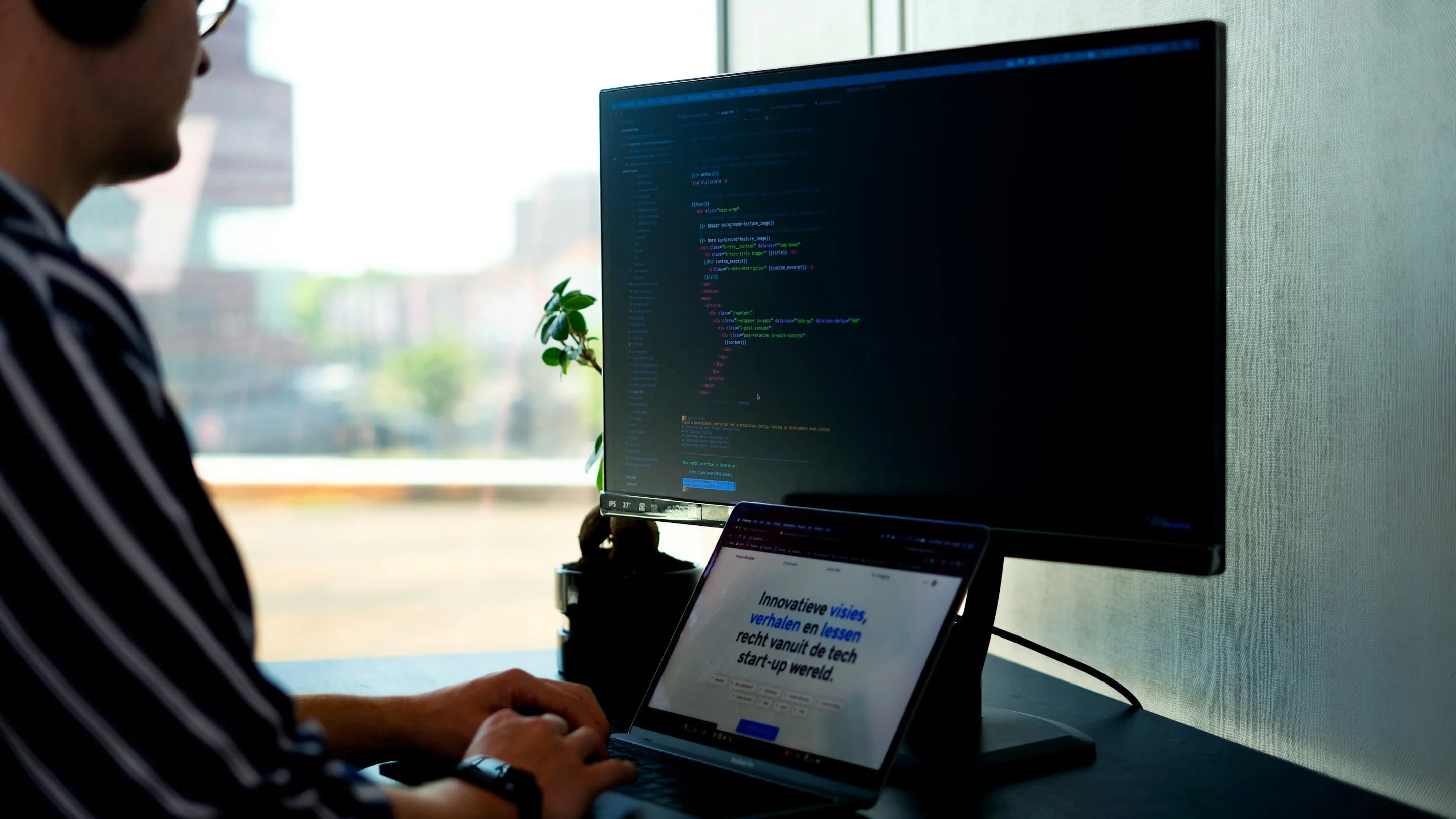
AI feature, chatbot or fine-tuning: let’s scope your use case before choosing an LLM solution and quote.
Objective
1
LLMs understand nuance, context, and intent in a way that rule-based NLP cannot. This enables genuinely useful features, assistants that understand your users, not just match keywords.
2
A single LLM can summarize, classify, extract, translate, generate, and reason, capabilities that previously required separate specialized models or manual processes.
3
LLM-powered features can be prototyped in days. The iteration cycle from idea to working demo is dramatically compressed compared to training traditional ML models.
4
o3, Claude Sonnet 4, and Mistral models improve with each release. Applications built on these APIs benefit automatically from model improvements without retraining.
Services
We have production experience with OpenAI, Anthropic, Mistral, Cohere, and open-source Llama models, we choose the right model for your use case, not the one we know best.
We define quality metrics and build test sets before writing a single prompt. LLM development without evaluation is guesswork, we treat it as engineering.
We implement output validation, safety filters, fallback logic, and cost caps so your LLM feature behaves predictably and safely under real production load.
We design LLM features from the user's perspective, streaming responses, loading states, error handling, and feedback mechanisms that make AI features feel polished, not experimental.
We define the prompt engineering and architecture suited to your business use case.
We define the prompt engineering and architecture suited to your business use case.
Method
Not promises. Results.
1
We define the task precisely, identify the right model family, and design an evaluation methodology to measure success before writing any code.
2
We develop and test prompts against a representative dataset, establishing a quality baseline that guides all subsequent improvements.
3
We integrate the LLM into your product with proper API abstraction, error handling, cost monitoring, and output validation.
4
We deploy with observability tooling and establish a process for capturing user feedback and continuously improving prompt and model performance.
Accuracy, costs, latency or a new feature: let’s discuss your integration and priorities.
FAQ
It depends on your task, latency requirements, and budget. o3 and Claude Sonnet 4 lead on complex reasoning. Mistral and Llama 4 offer excellent cost-performance for simpler tasks. We benchmark against your actual use case before recommending.
Copyright © PeakLab 2026. All rights reserved.

