

We build Node.js backends for business applications: APIs, real-time services and integrations, from discovery to production.
Three questions to prepare a useful discussion.
Question 1/3

Services
Not promises. Results.
Notifications, activity tracking and dashboards: Node.js supports exchanges between server and users through WebSockets or server events. We measure update speed, connection volume and cost before choosing this solution.
We audit an existing Node.js codebase, open-source libraries in the npm ecosystem, tests and security. The work can include a TypeScript migration, data-processing scripts or scheduled tasks, with a prioritized maintenance plan.
Business software built with Node.js can manage accounts, permissions, catalogs and back-office work behind a website, SaaS platform or mobile app. We choose an architecture suited to the product, from a simple API to the structured approach of NestJS.
We build Node.js services to connect your applications, data and tools. Authentication, input validation, documentation and integration tests make each interface usable by your team and customers.

Tell us about your needs, data and connected tools so we can scope the right Node.js service.
Objective
1
Node.js is a runtime that uses JavaScript on the server. Its non-blocking input/output model is useful when an app often waits for a database, external service or connected client. A fast response also depends on code, infrastructure and real traffic, so we measure it.
2
A shared language lets a team work on a React or Next.js front end and Node.js services. Shared validation tools and types simplify some exchanges, while the server must still check incoming data.
3
The Node.js ecosystem gives us a choice: Express offers a simple starting point for a lightweight API; NestJS provides a stronger framework across several business domains. We decide the architecture at discovery based on needs, team skills and the product's expected lifespan.
4
Node.js suits web services, APIs and real-time features. CPU-intensive work on the main thread can block other requests; in this complex case, we assess a background job or a separate microservice.
Maintenance
Our approach reviews production behavior, performance and code structure before proposing measurable improvements.
Dependencies, versions, security, tests and response times: a prioritized diagnosis to make your Node.js app more robust.
We take over sensitive modules in stages and verify each integration to limit service interruption.
Fixes, updates, documentation and knowledge transfer keep your team in control of the backend.
Dependencies, versions, security, tests and response times: a prioritized diagnosis to make your Node.js app more robust.
We take over sensitive modules in stages and verify each integration to limit service interruption.
Fixes, updates, documentation and knowledge transfer keep your team in control of the backend.
Interfaces
Documented services for a website, mobile app or business platform, with explicit access rules.
WebSockets or server events for features requiring immediate updates and reliable connection handling.
A simple internal tool, imports and deferred jobs to process data without slowing user requests.
Services
We connect discovery, design and Node.js development to build a solution suited to business workflows, users and customer goals.
Our developers document interfaces, framework choices and data structures. Simple conventions ease code takeover and software maintenance.
Tests of critical journeys, input validation and error handling support service quality, security and reliability.
We monitor incidents, version updates and new needs with maintenance suited to your team and cloud environment.
See how Celeste brought its catalog, purchasing journey and back office together in a web application.
See how Celeste brought its catalog, purchasing journey and back office together in a web application.
Why us
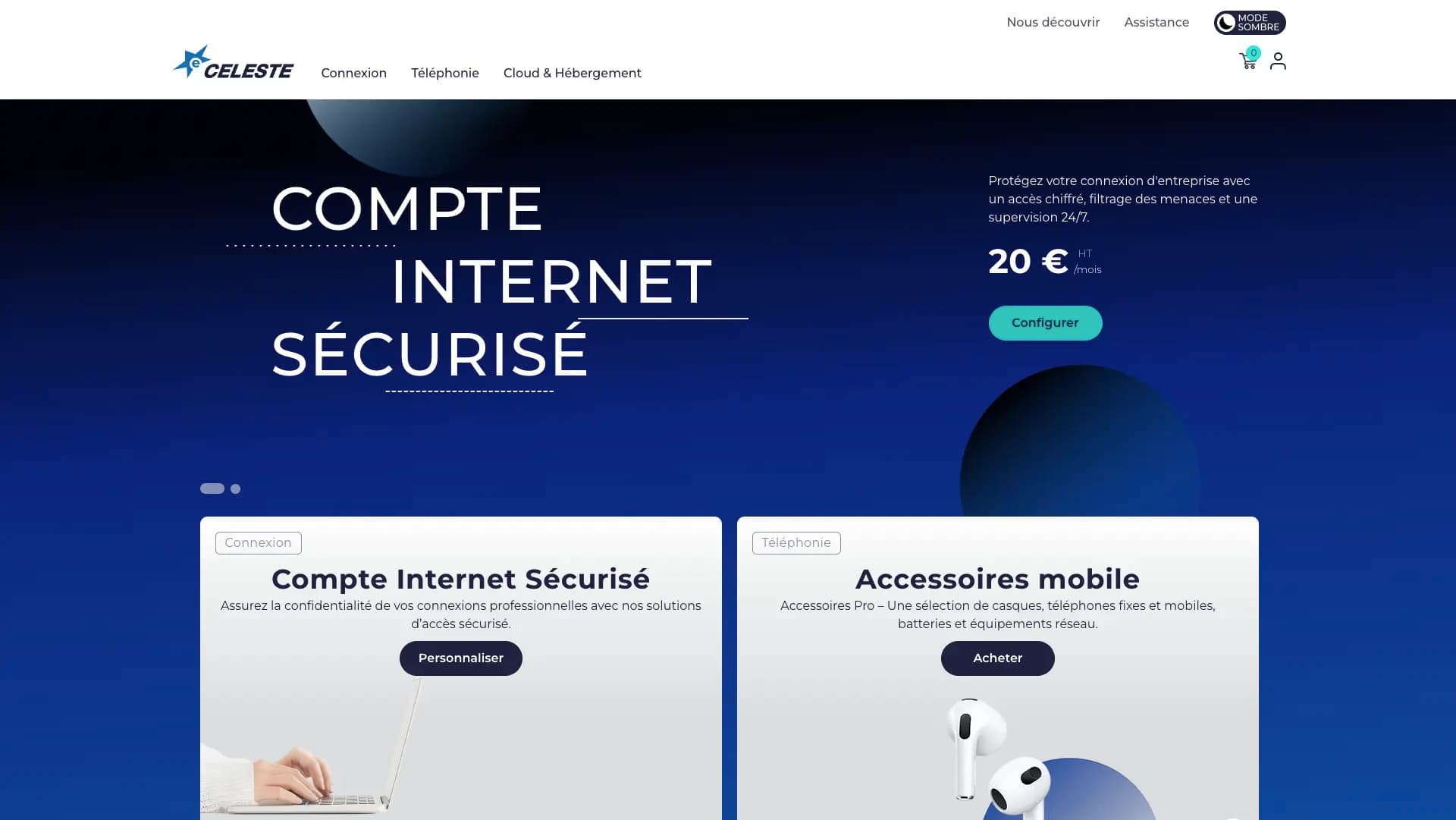
PeakLab helped B2B telecom company Celeste build a unified sales platform. The project uses React, TypeScript and Node.js with PostgreSQL to connect a catalog, configurator and back office. The case study covers the context, design and results.
Node.js Backend
React Web interface
PostgreSQL Database
Method
Not promises. Results.
1
We define users, data, external flows and project scope before choosing the stack and delivery approach.
2
We choose services, database, security rules and front-end exchanges based on business complexity.
3
The team develops Node.js features in stages. Each version checks exchanges, error cases and key journeys before delivery.
4
We prepare deployment, QA, alerts and documentation, then support the service after launch.
A review of code, APIs and production helps prioritize fixes and future changes.
FAQ
Node.js suits APIs, SaaS platforms and services with many network exchanges or real-time needs. We also assess heavy processing, your existing stack and team skills before recommending it.
Copyright © PeakLab 2026. All rights reserved.

