How to Build a Custom Business Application: The 2026 Decision Guide
LALucien Arbieu13 min read
Yes, an SMB can have a custom business application built without blowing its budget or losing months to delays, on one condition: control the scope. The Standish Group (CHAOS) data is unambiguous: small, well-scoped projects succeed in roughly 90% of cases, while very large projects succeed less than 10% of the time. In other words, failure is not inherent to custom software; it is almost always the symptom of a project that is too broad, poorly specified, or launched without user involvement.
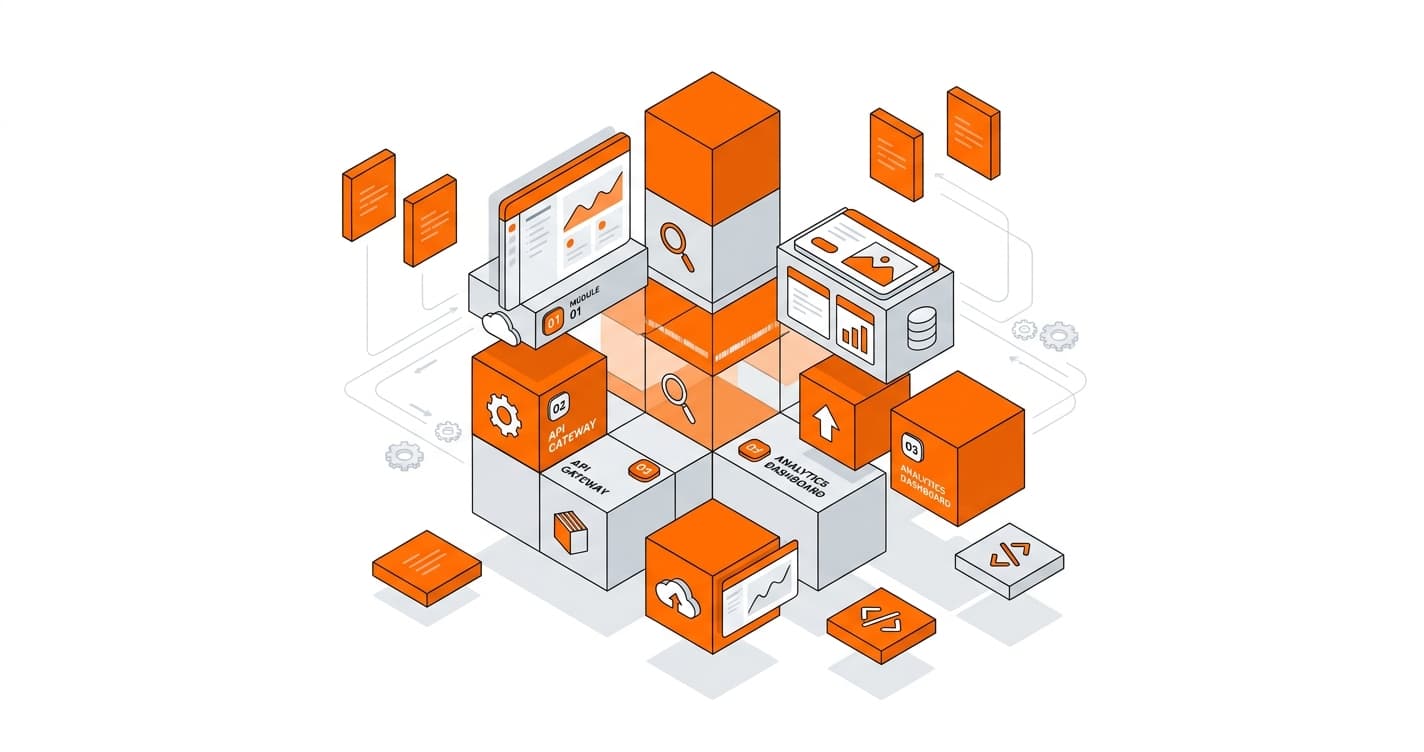
A custom business application is software developed specifically for your processes: order management, production tracking, CRM, inventory management, client portals, a lightweight ERP. Unlike an off-the-shelf tool, it fits the way you work instead of forcing you to adapt to it. This guide gives you what is missing almost everywhere else: 2026 cost and timeline ranges, a numbers-based comparison with SaaS and no-code, and a concrete method to turn your project into one of those 90% that succeed.
What is a custom business application, and when should you build one?
A business application is software that supports a specific company process rather than a generic need. The most common examples in SMBs are ERPs (integrated management), custom CRMs, inventory and production tools, client portals, and internal activity-tracking apps. Custom development becomes relevant when the off-the-shelf tool costs you more than the value it delivers, and that moment arrives faster than most people expect.
The signals that justify going custom
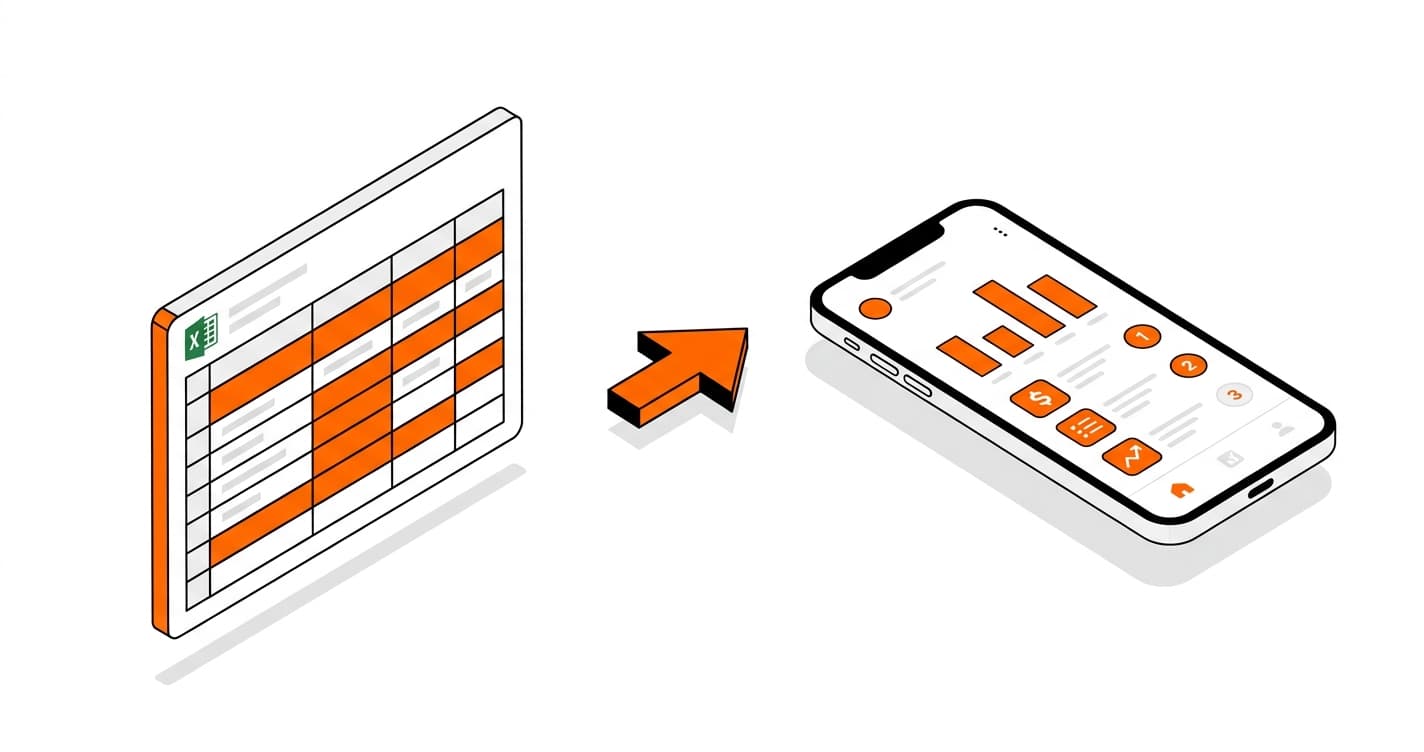
Several signals indicate that bespoke development pays off. The first and most reliable: more than 40% of your business processes are specific and do not fit the boxes of a market product. Next come patched-together integrations (beyond 5 mission-critical systems to connect), double data entry and the Excel exports that pile up, strong regulatory constraints (GDPR, NIS2), and above all the case where the process itself is a competitive advantage you do not want to standardize. When your teams create parallel files to work around the official tool, the signal is clear: you are already working against your software.
When custom is not the right answer
Custom is not always justified, and a good vendor will tell you so. Avoid it for commoditized functions: accounting, email, basic project management, or a standard CRM under 20 users. Avoid it too if your process changes every month, if your budget cannot cover a full MVP, or if your teams are not ready to get involved in the project. In those cases, a SaaS subscription remains faster and less risky. The right reflex is never ideological: it is to compare the real cost over time.
Custom, SaaS, or no-code: how do you decide?
The classic trap is comparing the upfront cost: a SaaS at a few dozen euros per month looks unbeatable next to development costing tens of thousands. But that is the wrong calculation. The right lens is the total cost of ownership (TCO) over 3 to 5 years: the SaaS subscription never drops and climbs with your headcount, whereas a custom application amortizes and becomes an asset on the balance sheet (a CAPEX rather than OPEX logic).
Criterion
Custom
SaaS
No-code / low-code
Upfront cost
High (€20k–150k)
Low (subscription)
Low (€2k–10k)
3–5 year cost
Amortizes, becomes an asset
Grows endlessly with users
Moderate but subscriptions + lock-in
Process fit
Total
Limited to the vendor’s options
Good until the complex-logic « wall »
Code and data ownership
Yours
The vendor’s
Strong platform dependency
Scalability
High
High
Degrades beyond a few thousand users
Time to launch
2–6 months
Immediate
2–4 weeks for an MVP
Best for
Differentiating core processes
Standardized generic needs
Prototype, MVP, simple internal tools
The right choice depends on how specific your processes are and on your number of users, not on a matter of principle.
Why you should think in total cost of ownership (TCO)
Over time, the gap widens in favor of custom as soon as volumes rise. According to Gartner analyses, the return on investment of custom development reaches about 55% over 5 years, with a break-even point crossed between 18 and 36 months versus an equivalent SaaS. The tipping thresholds are easy to remember: for a SaaS billed at €50/user/month, custom becomes profitable around 10 to 15 users over 3 years; at €150/user/month, from as few as 5 to 7 users. Beyond those thresholds, you pay a growing monthly rent for a tool that will never belong to you.
Over time, the SaaS subscription overtakes the custom investment; the break-even point typically sits between 18 and 36 months.
No-code: which cases is it for?
No-code / low-code (Bubble, Webflow, Airtable, Glide, FlutterFlow) is growing spectacularly: Gartner projects a market of $44.5 billion in 2026 and estimates that the majority of new applications will use these technologies. It is excellent for a prototype, an MVP, or a simple internal tool (10 to 50 users), deliverable in 2 to 4 weeks. Its limits appear quickly: scalability degrades beyond a few thousand concurrent users, vendor dependency (lock-in), subscription costs that climb, and a « wall » on complex business logic. Note that migrating from no-code to custom code often means rewriting from scratch. The hybrid approach, a robust back-end (Xano, Supabase) plus a no-code front end, then a shift to custom code once product-market fit is validated, is often the most economical.
Free tool
AI Specifications Generator
Create professional project specifications in minutes with our AI-powered tool.
How much does a custom business application cost in 2026?
The cost of a custom business application depends on scope, but the orders of magnitude in the market converge. For an agency day rate between €500 and €700 (excl. tax), here are the ranges observed in 2026:
Simple tool or MVP: €15,000 to €50,000
Business application (the most common SMB case): €40,000 to €150,000
Complex SaaS: €80,000 to €250,000
Custom ERP: from €100,000
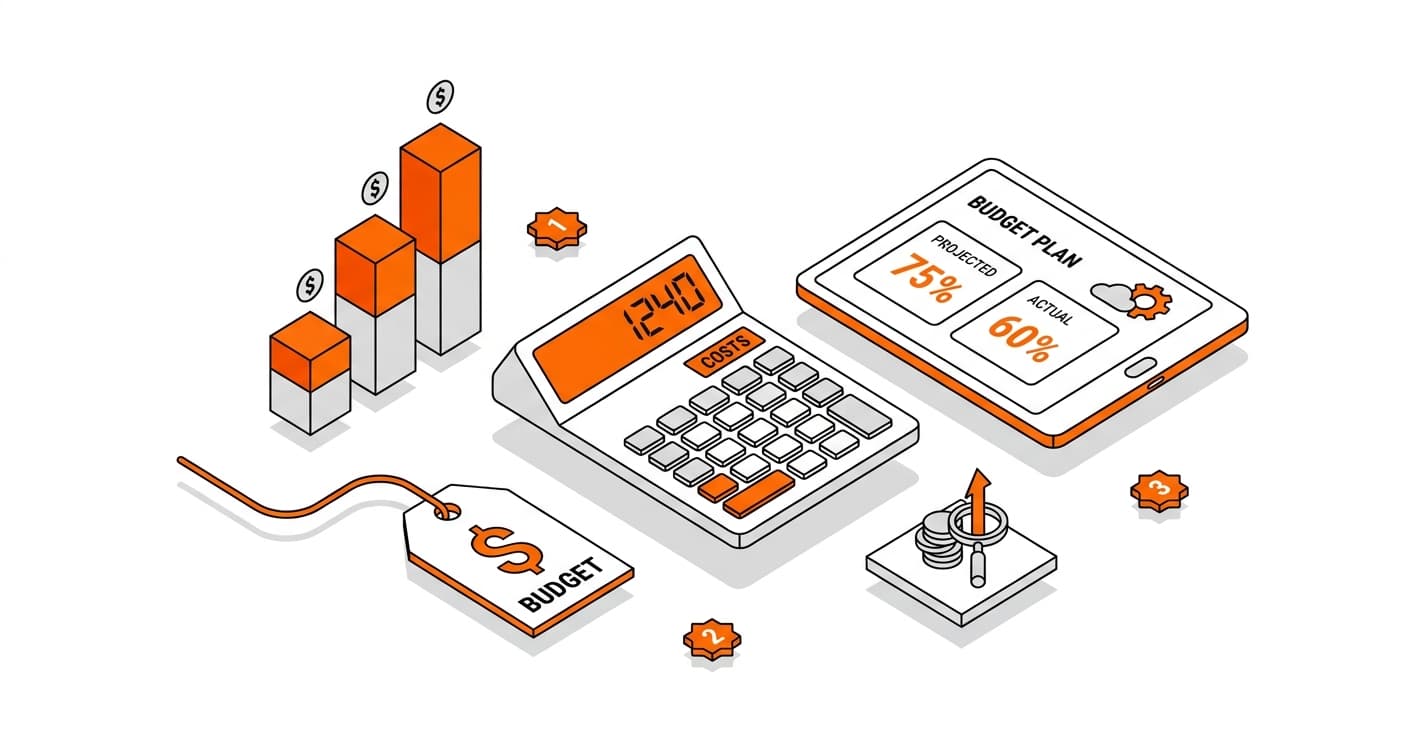
The typical cost breakdown sheds light on the quote: scoping 5 to 10%, UX/UI design 10 to 20%, development 50 to 70%, with cloud hosting on top. One often-ignored item weighs heavily: roughly 60% of the total cost of an application is concentrated after launch, in maintenance and evolutions.
Maintenance and funding support (CII, BPI)
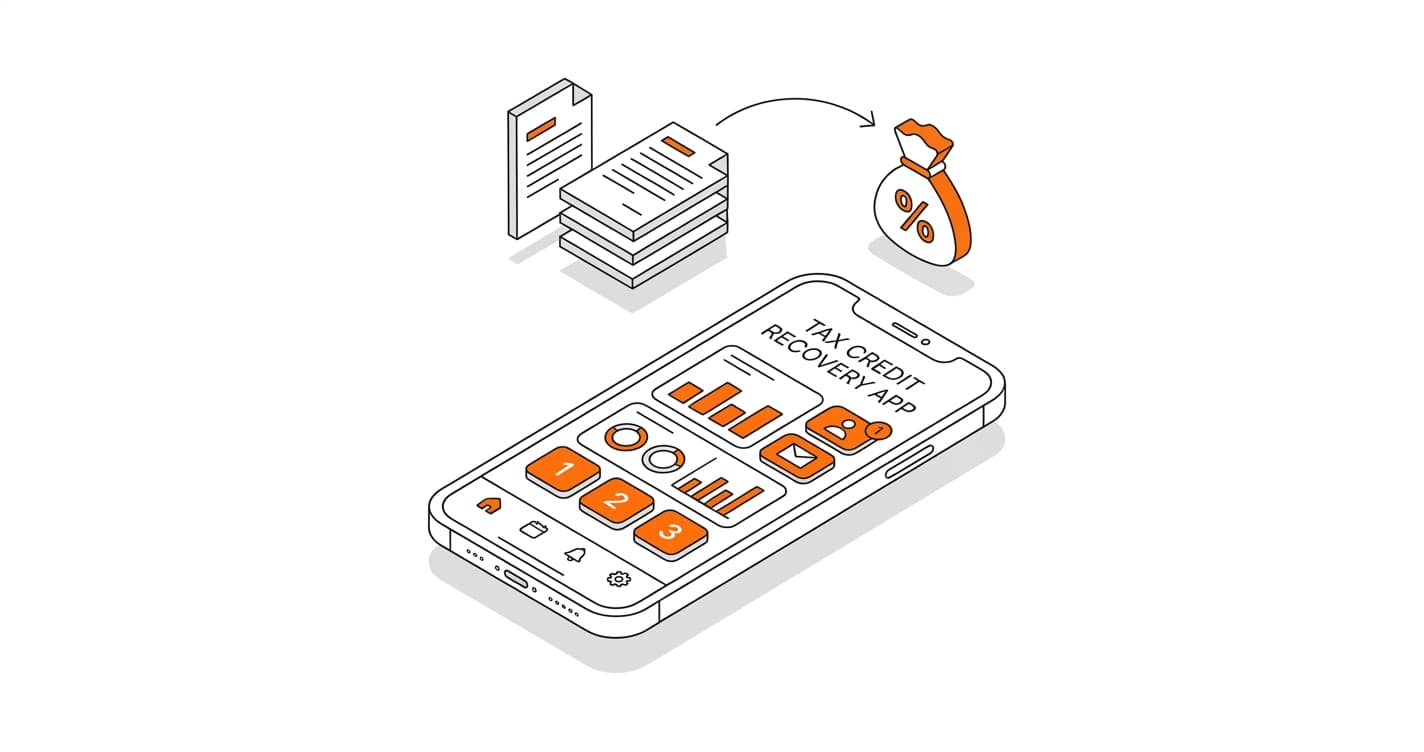
Annual maintenance represents 15 to 25% of the initial cost, on average €1,000 to €3,000 per month. It is not optional: without a maintenance budget, technical debt builds up (it can absorb up to ~42% of developers’ time, according to Stripe). Good news on funding: France’s Innovation Tax Credit (CII) reimburses 20% of eligible expenses for SMBs (capped at €400,000 of spending), and BPI France offers several schemes (French Tech Grant, Innovation Aid, Innovation Loan). On an €80,000 project, the CII can represent up to €16,000 in savings.
How long does it take to build a business application?
Timelines follow the same logic as costs, and the good news is that a first useful deliverable arrives quickly. Count on 2 to 4 months for a functional MVP, 4 to 6 months for a medium-complexity project, and 6 to 12 months for a complete application with all features. The typical breakdown is as follows: scoping 1 to 2 weeks, design 2 to 3 weeks, then 2-week sprints in an agile method. The point of this approach is to avoid the black-box effect: at the end of each sprint, a demo shows you a working version, and you keep control of the priorities.
What are the steps to build a custom business application?
A well-run project follows four clear phases, from scoping to maintenance.
Scoping (1 to 2 weeks): mapping existing processes, identifying key users, defining the scope of the first deliverable, and writing the requirements document. This is the most strategic phase: the best agencies devote 15 to 20% of project time to it.
Design and prototyping (2 to 3 weeks): mockups of the main screens, tested directly with field users to validate usability before writing a single line of code.
Iterative development (2 to 4 months): agile 2-week sprints, with a demo at the end of each sprint. You watch the product grow and you steer the priorities as you go.
Deployment and handover: data migration, team training, knowledge transfer, and setting up maintenance. Acceptance ends with full acceptance, acceptance with reservations, or a formal rejection.
How do you control the risk of failure?
This is the real question behind any hesitation, and the answer is reassuring: risk can be managed. The three success factors identified by the Standish Group are user involvement, executive support, and a clear statement of requirements. Conversely, the BCG (2024) study reminds us that two-thirds of large technology programs miss their time, budget, or scope targets, most often for lack of an overall plan. The safeguards come down to a few principles:
Start small (MVP): a refocused scope reduces the initial budget by 40 to 60% and tips the project onto the side of the 90% that succeed.
Lock down the requirements document: the golden rule is « if it is not written down, it is not to be built. » Plan for ~10% budget margin.
Test continuously: fixing a bug in production costs 5 to 10 times more than in development (IBM Systems Sciences Institute).
Stay in control: require ownership of the code and data, mainstream technologies (TypeScript, React, Node.js) to avoid dependency, and a knowledge transfer written into the contract.
On the contractual side, the healthiest structure is a fixed price for V1 (precise scope) then time-and-materials for evolutions. Never pay 100% before acceptance and require intermediate deliverables. If you want to secure this phase, an engagement for custom business application development that includes scoping from the start is the best investment to reduce risk.
Agency, freelancer, or IT services firm: how do you choose a vendor?
The choice of vendor shapes the outcome, and the number-one success factor is their ability to understand your business, not their rate. Each profile has its sweet spot:
Freelancer: day rate 20 to 30% lower than a services firm, sharp expertise, ideal for a targeted mission or an MVP (budget €5,000 to €15,000). The main risk: a single person, so costly code handover if they become unavailable.
Agency: a multidisciplinary team (project manager, designer, front/back developer, QA), a structured methodology, and service continuity. A premium of about 20 to 30% versus a freelancer, but often the best fit for a strategic business project.
IT services firm (ESN): the ability to mobilize full teams and guarantee continuity, suited to large, long, complex projects. Generally more expensive and with less proximity.
Whatever the profile, require transparency on prices and process, a mainstream stack, a product approach (not « code by the yard »), and built-in knowledge transfer. Best practice: send your requirements document to 3 to 5 vendors and ask for firm commitments on price and timeline.
Does AI change the game in 2026?
AI genuinely speeds up development, but it does not replace expertise, and it is worth saying so honestly. On the gains side, GitHub measured (a controlled study with Accenture, ~4,800 developers) that developers equipped with Copilot complete a given task 55% faster. Industry analyses anticipate a 10 to 25% reduction in development costs thanks to AI, which mechanically makes custom more accessible to SMBs by narrowing its price gap with SaaS.
But two caveats make any marketing promise credible. First, the METR (2025) study shows that on large, mature codebases, experienced developers were 19% slower with AI, even though they believed they were faster. Second, the Veracode (2025) report finds that AI-generated code introduces a security vulnerability in 45% of cases. The takeaway: AI is an accelerator in the hands of experienced developers, not a substitute. The value remains in architecture, security, and business understanding, exactly where « vibe coding » fails. This need for human guidance is also confirmed by the France Num Barometer 2025: 37% of SMB leaders struggle to identify a suitable digital vendor.
How much does a custom business application cost?
In 2026, count on €40,000 to €150,000 for a typical business application, €15,000 to €50,000 for an MVP or simple tool, and €100,000 and up for a custom ERP. Development accounts for 50 to 70% of the quote. Also factor in maintenance (15 to 25% of the initial cost per year) and support such as France’s Innovation Tax Credit, which covers 20% of eligible expenses.
How long does it take to build a business application?
A functional MVP ships in 2 to 4 months, a medium-complexity project in 4 to 6 months, and a complete application in 6 to 12 months. The agile method with 2-week sprints lets you get a usable first version quickly, without waiting for the end of the project, and adjust priorities as you go.
Who owns the code of a custom application?
With well-contracted custom development, the code and data belong to you, which makes them an asset on the balance sheet. Require an explicit assignment-of-rights clause in the contract and favor documented mainstream technologies. This is the opposite of SaaS or no-code, where you remain dependent on the vendor and its terms.
Should you choose custom or a SaaS?
SaaS suits generic, standardized needs; custom becomes worthwhile as soon as more than 40% of your processes are specific. The decisive calculation is the total cost over 3 to 5 years: for a SaaS at €50/user/month, custom amortizes around 10 to 15 users; at €150/user, from as few as 5 to 7 users.
Can no-code replace custom development?
No-code is ideal for a prototype, an MVP, or a simple internal tool (10 to 50 users), deliverable in a few weeks for €2,000 to €10,000. Beyond that, it hits walls on scalability, customization, and security. Migrating later to custom code often means rewriting everything, which cancels the initial saving.
How do I keep my project from failing?
Small, well-scoped projects succeed in roughly 90% of cases. Start with an MVP, write a precise requirements document, involve users and leadership, test continuously, and budget for maintenance from the start. On the contract side, favor a fixed price for V1 and time-and-materials for evolutions, and never pay in full before acceptance.
Conclusion
Building a custom business application is not a risky bet when you follow one simple rule: start small, scope precisely, and reason in total cost over time rather than upfront cost. The numbers confirm it: a project with controlled scope succeeds in roughly 90% of cases, amortizes in 18 to 36 months, and leaves you owning an asset aligned with your business. The real question is not « custom or not, » but « where to start without going wrong. » If you are unsure about scope, budget, or the right vendor, get support from the scoping phase onward: it is the step that separates the 90% of successes from the rest.
About the author
Lucien Arbieu is CEO of PeakLab, an agency specialized in custom business application development for SMBs. Over 20 projects delivered. See him on LinkedIn · Case studies.
Methodology and transparency
The cost and timeline ranges presented reflect the orders of magnitude observed in the market in 2025-2026 and the projects actually delivered by our team; they vary by scope and do not constitute a quote. The statistics on success, productivity, and security come from public, independent sources, cited below. PeakLab is a development agency: this article remains deliberately objective, including on the cases where custom is not the right answer.
Sources: Standish Group (CHAOS); Gartner; BCG (Most Large-Scale Tech Programs Fail, 2024); Veracode (GenAI Code Security Report, 2025); METR study (arXiv, 2025); GitHub/Accenture; McKinsey Global Institute; France Num Barometer 2025 (DGE/Crédoc); Grand View Research; IBM Systems Sciences Institute.
Last updated: 12 june 2026. This article is reviewed periodically to stay aligned with current prices, timelines, and trends.
LA
Lucien Arbieu
AI expert and digital transformation consultant at PeakLab.