If you are about to pay for a mobile app, a web platform, or a SaaS product, France can hand you back 20% of the eligible development spend. That is the Innovation Tax Credit for software development, which the French call the Crédit d’Impôt Innovation (CII). It is a government scheme, and it targets small and medium sized businesses. On up to €400,000 of expenses per year, you can therefore recover as much as €80,000 per year. You either offset that amount against your tax or, in some cases, you claim it back as a refund.
Two things decide whether you actually see the money. First, your project has to qualify: it must be a genuinely new product, not a copy or a simple website. Second, and this is where most companies lose everything, the agency that builds it must hold a valid CII approval. So if you hire a provider without one, the credit on that work drops to zero, however good your app is.
This guide speaks to a director, not to an accountant. In short: what you get back, whether you qualify, how to claim, and the one question that protects your budget.
The Innovation Tax Credit for software development, in two minutes
The Innovation Tax Credit hands a share of your innovation spending back to you. It extends the older research tax credit, which the French call the CIR, but it targets small and medium sized companies, in French a PME.
To qualify as a company, you need to fit the European definition of an SME. In practice, that means fewer than 250 employees, and either annual turnover below €50 million or a balance sheet total below €43 million. You also need to pay French corporate tax or income tax.
Now the numbers, and they are current. The rate is 20% of eligible expenses in mainland France, for spending from 1 January 2025 onward. Before that date it was 30%, so older articles may quote the wrong figure. The scheme caps eligible expenses at €400,000 per year, which puts the maximum credit at €80,000 per year. It also runs until 31 December 2027, and it covers spending up to that date.
Software fits this scheme naturally. For example, designing the prototype of a new mobile app, a new web platform, or a new SaaS product sits squarely inside it, as long as the product is genuinely new to the market. In other words, building software is one of the clearest ways to use the credit. If you want the legal detail, start with the public service sheet on service-public.gouv.fr (sheet F35494), the DGE page on entreprises.gouv.fr, and Bpifrance.
Is your app project eligible?
Short answer: yes, if your product is genuinely new and clearly better than what already exists. No, if it is a copy or a simple showcase site.
So here is the central test. At the start of the work, your product has to beat what is already on the market, whether on technical performance, features, usability, or eco design. On top of that, you have to plan to sell it. A tool you build purely for your own internal use will not count.
In plain terms, projects like these tend to qualify:
- A vertical SaaS with a feature that does not yet exist in your sector.
- An app that turns an expert know how into a product you will offer to clients or users.
- A platform that automates, in a new way, a task that no existing tool handles properly.
And these do not qualify: marketing and sales spending, the production or roll out phase, a simple showcase website, and a clone of an existing tool with no real improvement. Likewise, a product you build only for your own back office, with no plan to sell it, usually falls outside the credit.
Secure it upfront: the tax ruling (rescrit fiscal). If you are not sure your project qualifies, you can ask the tax office for a formal opinion before you claim. You have to file the request at least six months before the filing deadline. Then the answer binds the administration, so it protects you if they audit you later. In short, for a borderline SaaS or web app, this is the safest route.
What it changes on a €40,000 project
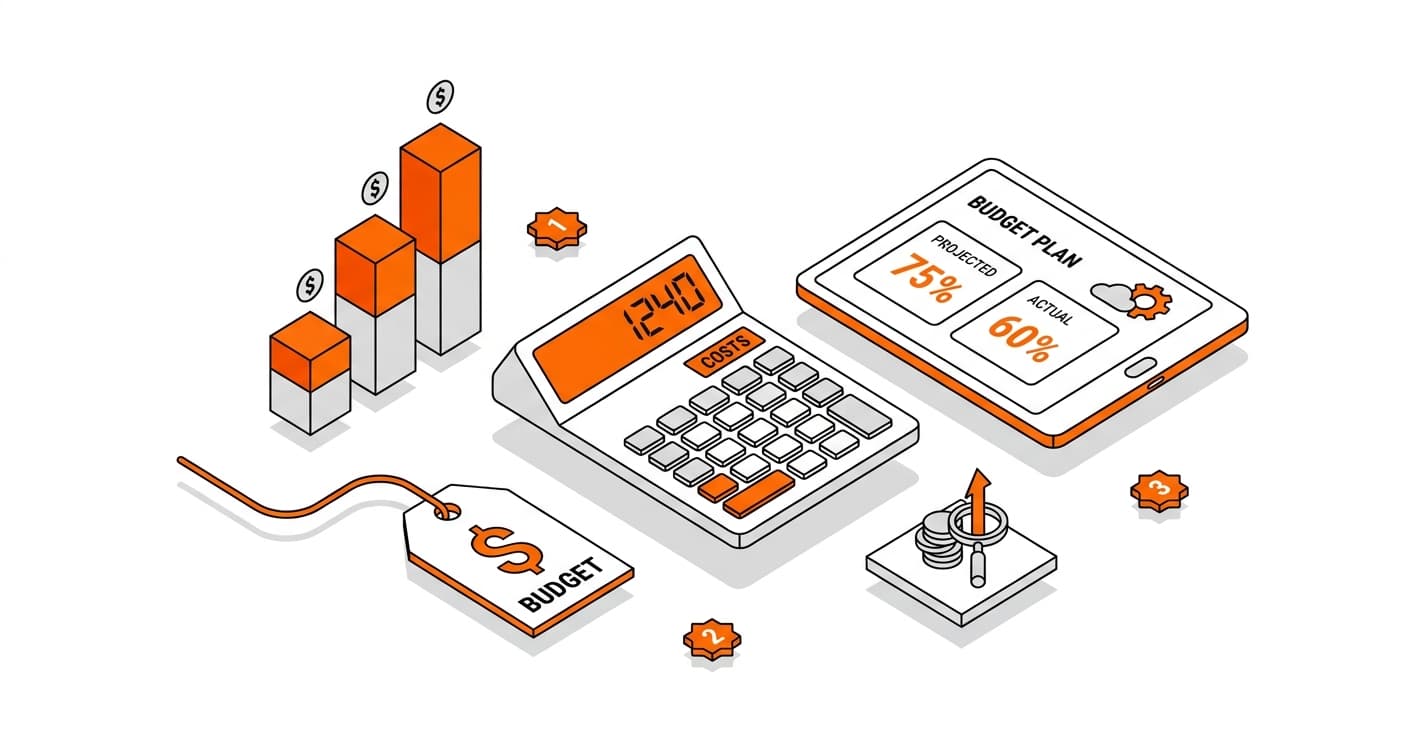
Numbers make it concrete. Say you commission a custom app for €40,000 before tax. At 20%, the credit gives you €8,000 back, so your real cost falls to €32,000. On a bigger build at €100,000, you recover €20,000, for a real cost of €80,000. Once your eligible spend hits the €400,000 ceiling, the credit tops out at €80,000 for the year.
This is exactly what shifts the maths against no-code. On paper, off the shelf tools look cheaper on day one. Once you apply the credit, though, the real gap on a serious build narrows, and you also gain things a no-code stack cannot give you.
| Criterion | Custom build with the Innovation Tax Credit | No-code / off the shelf |
|---|---|---|
| Price on day one | Higher | Lower |
| Real cost after the credit | Lower by 20% of eligible spend | No credit on subscription fees |
| Who owns the code | You do | You rent the platform |
| Technical ceiling as you grow | None, the product grows with you | You hit the tool’s limits |
| Eligible for the credit | Yes, with an approved provider | Usually no |
So the point is not that custom always wins. Rather, the credit removes much of the price objection, while it leaves you with solid foundations, code you own, and room to grow. If you want to go deeper, our page on custom software development shows how we scope a build. Later, I will link a comparison of no-code and custom development here as well.
The trap: your agency must hold a CII approval, or you get nothing
This is the part almost no one explains, and it is where budgets vanish.
Your provider only makes subcontracted expenses eligible if it holds a valid CII agrément, the official approval that the French administration issues. So if you hand your project to a development agency without one, you lose the entire credit on that work. The quality of the build changes nothing, because the administration does not bend on this point.
For example, here is a quick illustration. On a €50,000 subcontracted build, the approval is worth €10,000: with it you recover that sum, without it you recover nothing. Same code, same result, two very different invoices.
The administration grants the approval for three to five years, and you can renew it. It also has to stay valid for the whole time your provider builds your project.
The one question to ask before you sign
So there is a single question to put to any provider before you commit, and it takes ten seconds: « Are you CII-approved, and until what date? »
One honest point, because it matters in an audit. The approval shows that the agency has the people and the methods to run innovative design work. On its own, though, it does not prove that your specific project qualifies. You still need a real, documented, genuinely new product. In other words, the approval is necessary, not sufficient, which is exactly why you want a partner who builds the credit into the project from the start rather than bolting it on at the end.
That is how we work. PeakLab is a CII-approved development agency since 2026. So we weave the CII dimension into a project from the scoping phase, and the documentation grows as we go rather than us rebuilding it under pressure.
How do you actually claim it?
The mechanics are simpler than they sound. You declare your expenses on form 2069-A-SD, which you attach to your annual results filing. It is the same form as the research credit, so your accountant already knows it.
You then offset the credit against your corporate tax or income tax. If it exceeds the tax you owe, you can carry the balance forward or, for some companies, claim it back as a refund. New companies, for example, can get an immediate refund during their first years, that is the year they start plus the following four. Loss-making SMEs can also get an immediate refund rather than waiting.
Above all, your supporting file is what decides an audit: time tracking on the project, documentation of the design phases, and proof of the expenses. This is not paperwork for its own sake. Rather, it is what turns a claim into a solid one. On our projects, PeakLab supplies the technical documentation of the build, which feeds straight into the file your accountant puts together.
Conclusion and CTA
The Innovation Tax Credit turns a software project into a much smaller net investment: 20% of eligible spend back, up to €80,000 a year, on prototypes of genuinely new products, at least until the end of 2027. In short, the scheme rewards new products, it punishes copies, and, on subcontracted work, it only pays out when your agency holds a valid approval. Get those three things right, and the case for building the right product, rather than the cheapest one, gets much easier to make.
So the fastest way to know where you stand is to have someone look at your project directly. Book a free 30 minute eligibility audit. We scope your app project and give you an estimate of the credit you could recover. One call, clear numbers.