In 2026, choosing a web development agency is no longer just about comparing quotes or portfolios. With rapidly evolving technologies, the explosion of mobile usage, the integration of artificial intelligence, ever-increasing SEO demands, and performance challenges, selecting the right web partner has become a highly strategic decision for businesses.
A web development agency today operates well beyond simple website creation. It directly influences a digital project’s online visibility, user experience, security, scalability, and even profitability. In 2026, a poor decision can result in a site that is difficult to maintain, poorly ranked on Google, or unable to evolve with market needs.
Faced with an increasingly crowded market — full-service agencies, specialized studios, freelance collectives, no-code agencies, and ultra-tech firms — it is essential to know how to choose a web development agency that truly fits your goals. Not all of them offer the same level of expertise, nor the same capacity to support a project over the long term.
In this article, we will explore how to choose a web development agency in 2026, which criteria to analyze, which mistakes to avoid, and how to identify a partner capable of delivering a high-performing, scalable website aligned with your business and SEO objectives.
Why is choosing a web development agency a strategic decision in 2026?
In 2026, choosing a web development agency has become a genuine strategic lever, far beyond simply creating a website. A website is no longer a static showcase: it is a central business tool, at the heart of traffic acquisition, conversion, brand credibility, and overall company performance. A poorly chosen agency can hinder growth, while the right partner can accelerate it sustainably.
The first reason lies in growing technological complexity. In 2026, a high-performing website must simultaneously address numerous challenges: loading speed, mobile compatibility, accessibility, security, integrations with third-party tools (CRM, ERP, marketing automation), and sometimes artificial intelligence components. Web development is no longer just about assembling pages — it means designing a solid, scalable architecture. A competent agency anticipates these needs from the outset, avoiding costly redesigns down the line.
The choice of agency is also strategic for SEO reasons. Search engine requirements are increasingly demanding: Core Web Vitals, technical structure, internal linking, JavaScript handling, structured data, server performance… In 2026, a technically poorly built site can be penalized, even with great content. A web development agency must therefore master technical SEO from the development phase, as structural errors are difficult to fix after the fact.
User experience (UX) is another key factor. Internet users are increasingly demanding, accustomed to smooth, fast, and intuitive interfaces. A poorly designed site generates bounce, reduces conversion rates, and damages brand image. In 2026, the chosen agency must be capable of designing effective user journeys — conversion-focused and adapted to real-world usage — not merely aesthetically pleasing ones.
The choice of agency is also strategic due to security challenges. Cyberattacks, application vulnerabilities, and compliance issues are on the rise. A poorly secured site can lead to data breaches, service outages, or regulatory penalties. A serious agency integrates security from the start: development best practices, updates, data protection, and appropriate hosting. In 2026, security is no longer optional — it is a baseline requirement.
Another decisive point concerns scalability. Many web projects are designed to meet an immediate need, without a long-term vision. Yet businesses evolve: traffic increases, features are added, international expansion occurs, new services are launched. A strategic agency builds a site capable of growing with the business, without requiring a complete rebuild every two years.
The choice of agency also impacts the project’s profitability. Poorly scoped development often leads to budget overruns, missed deadlines, and hidden maintenance costs. In 2026, a good web development agency knows how to precisely scope a project, propose solutions suited to the actual budget, and optimize the site’s total cost of ownership over several years.
Finally, the choice of agency is strategic because it commits you to a long-term relationship. A website is never static: it evolves, gets updated, and is continuously optimized. A reliable agency becomes a true digital partner, capable of supporting the business over time, proposing continuous improvements, and anticipating market changes.
In summary, in 2026, choosing a web development agency is not an operational decision — it is a major strategic one. It determines the visibility, performance, security, and scalability of your digital project. Taking the time to choose the right agency is an investment in a solid foundation for your company’s future growth.
What criteria should you analyze when choosing a web agency?
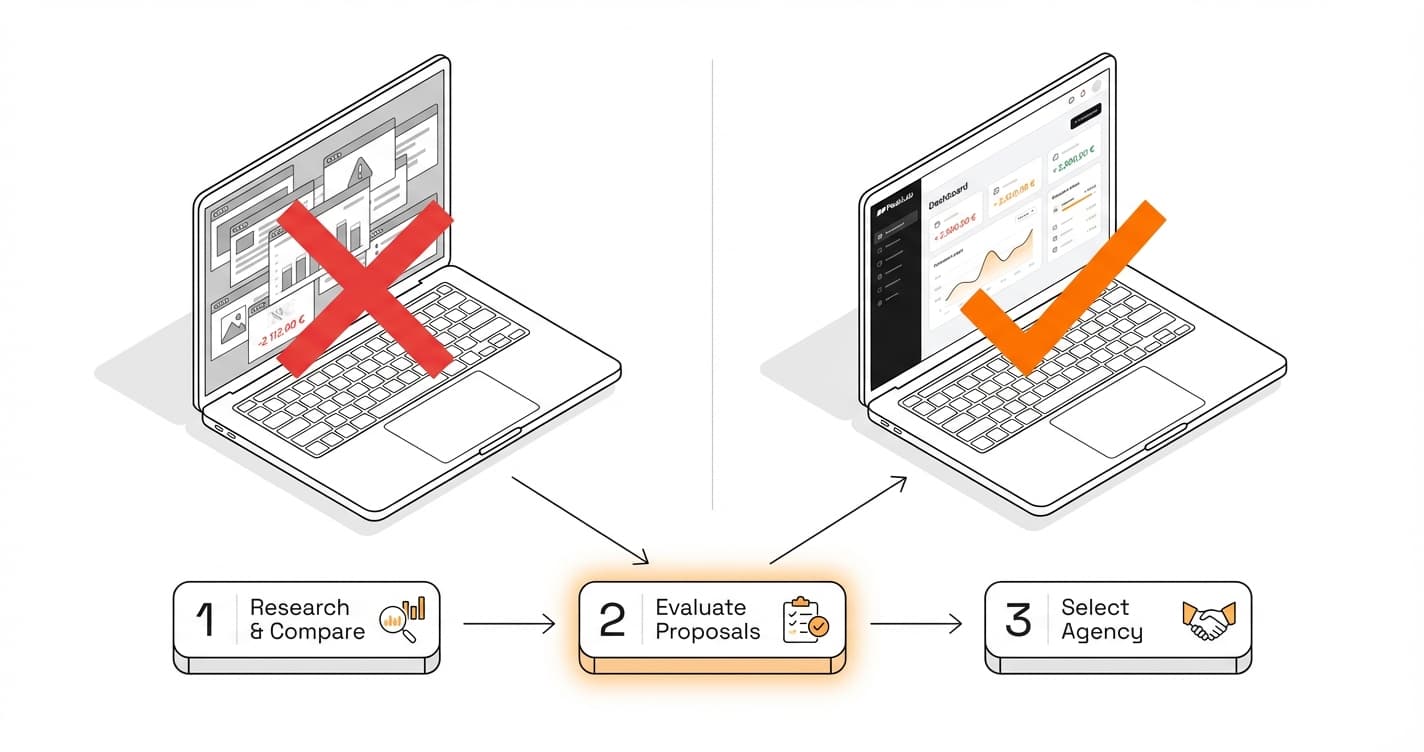
Choosing a web development agency should never be taken lightly, especially in 2026 where technical, SEO, and business challenges are closely intertwined. To select a partner truly suited to your objectives, it is essential to analyze several key criteria, both strategic and operational. Here are the essential points to examine before making your decision.
Technical expertise and technology proficiency
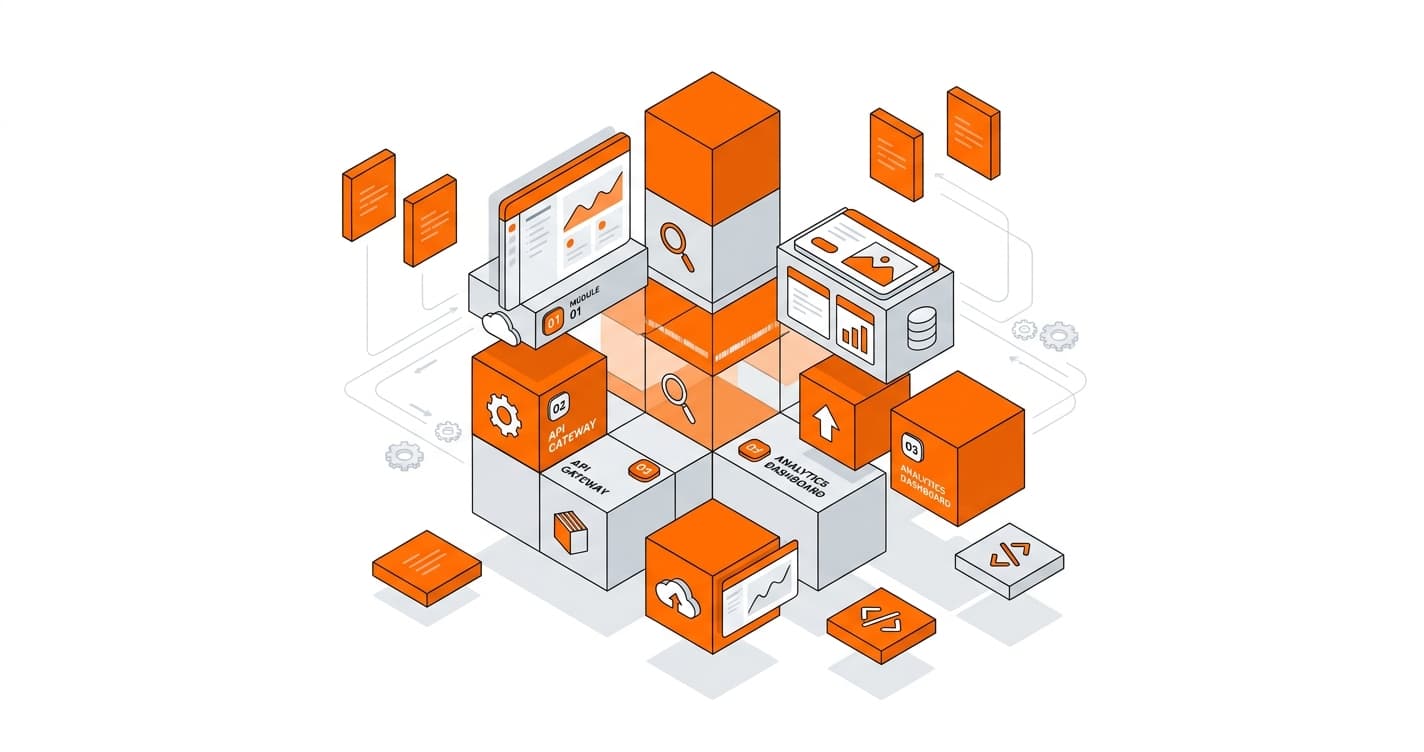
The first criterion to analyze is the agency’s actual technical capability. A good web agency must master the technologies suited to your project: CMS, front-end and back-end frameworks, server performance, API integration, security, and scalability. It is not just about knowing tools, but about knowing how to choose the right tech stack based on your current and future needs.
A competent agency is able to explain its technical choices clearly, without unnecessary jargon, and to propose a scalable architecture built to last.
Understanding of business challenges
A high-performing web agency does not simply build a functional website. It must understand your business objectives: lead generation, sales, brand awareness, customer retention, or international growth. This understanding translates into precise project scoping, feature prioritization, and results-oriented design.
If an agency talks only about design or technology without addressing your business objectives, that is often a red flag.
SEO competencies built in from the start
In 2026, SEO can no longer be added as an afterthought. It must be integrated from the very beginning of the site’s design. A serious web agency masters technical SEO: code structure, loading speed, mobile compatibility, URL management, internal linking, structured data, and accessibility.
An agency unable to explain how it integrates SEO into its development process risks delivering a site that is difficult to rank on search engines.
Quality of user experience (UX)
UX is a decisive criterion for a site’s performance. A good web agency knows how to design clear, smooth user journeys oriented toward conversion. It analyzes behaviors, anticipates friction points, and proposes interfaces adapted to real-world usage.
A visually successful but unintuitive site directly penalizes conversion rates and brand credibility.
Ability to deliver a secure and reliable site
Security is a non-negotiable criterion. A web agency must integrate security best practices from the development stage: data protection, updates, access management, backups, and prevention of common vulnerabilities.
In 2026, a poorly secured site can have serious consequences, both financial and reputational.
Transparency on costs and timelines
Another essential criterion is the clarity of the commercial proposal. A good web agency is transparent about costs, timelines, deliverables, and maintenance terms. It does not deliberately underestimate the budget to win the client, only to generate cost overruns later.
Transparency is a strong indicator of professionalism and reliability.
Support and client relationship
Choosing a web agency also means choosing a long-term partner. The quality of support, communication, and availability are decisive criteria. An engaged agency provides post-launch follow-up, evolution recommendations, and responsive support.
A strong working relationship facilitates collaboration and project success.
References and client feedback
Finally, it is essential to analyze the agency’s references. Completed projects, client testimonials, and case studies allow you to assess the agency’s seriousness, consistency, and real-world experience on projects similar to yours.
An agency capable of demonstrating concrete results naturally inspires greater confidence.