Building a website, developing an application, or overhauling a digital platform is a strategic investment. But one question comes up consistently among entrepreneurs and business leaders: what does a web agency cost in 2026?
Between a brochure website, an e-commerce store, custom development, or a business application, prices can vary significantly. Some agencies offer websites for a few thousand euros, while others charge tens of thousands for their projects. So how do you make sense of these differences? What criteria actually drive the cost?
In 2026, business expectations have evolved: SEO performance, optimized UX, automation, integrated AI, enhanced security… All of these elements directly impact the budget.
In this article, we will analyze in detail average web agency rates in 2026, the factors that influence pricing, and how to determine the right budget for your digital project.
What Are the Average Web Agency Rates by Project Type in 2026?
In 2026, the rate charged by a web agency depends primarily on the type of project, the level of customization, and the technical complexity. There is no single price, but average ranges based on your needs.
1. Brochure Website
For a professional brochure website (5 to 10 pages), rates typically fall between €2,000 and €8,000.
This price often includes:
- Custom design
- Responsive integration
- Basic SEO optimization
- Contact form
Agencies offering fixed-price packages often position their services in this category. This can work well for straightforward projects, but these packages sometimes lack flexibility if requirements evolve.
2. E-Commerce Website
An e-commerce website requires more work (product catalog, payments, security, logistics management). Average rates in 2026 range from €5,000 to €20,000, depending on:
- The number of products
- The level of customization
- Advanced features
- ERP or CRM integration
A custom e-commerce project can exceed these figures if specific developments are required.
3. Web Application or Business Platform
For a custom web application (internal CRM, custom ERP, business tool), budgets typically start around €15,000 to €30,000 and can reach €50,000 or more depending on complexity.
These projects require:
- Robust technical architecture
- Advanced backend development
- Enhanced security
- API integrations
- Testing and maintenance
Here, the rate depends heavily on the level of customization.
4. Full Website Redesign
A strategic redesign (UX, SEO, performance, technical structure) generally costs between €4,000 and €15,000, depending on the scope of changes.
Fixed Price vs. Custom Quote
Some agencies offer fixed prices. This can feel reassuring, but these packages are often standardized. They do not always account for:
- Your actual business objectives
- Your internal processes
- Your specific automation needs
- Potential productivity gains
Conversely, agencies like Peak Lab favor custom quotes. This approach makes it possible to analyze requirements precisely and avoid charging for unnecessary features.
At Peak Lab, the philosophy is performance-driven: build only what generates real business impact. This methodology often allows clients to save money, because the project is built around their operational inefficiencies rather than a standard package.
A tailored quote also makes it possible to anticipate future developments and optimize the architecture from the outset.
In Summary
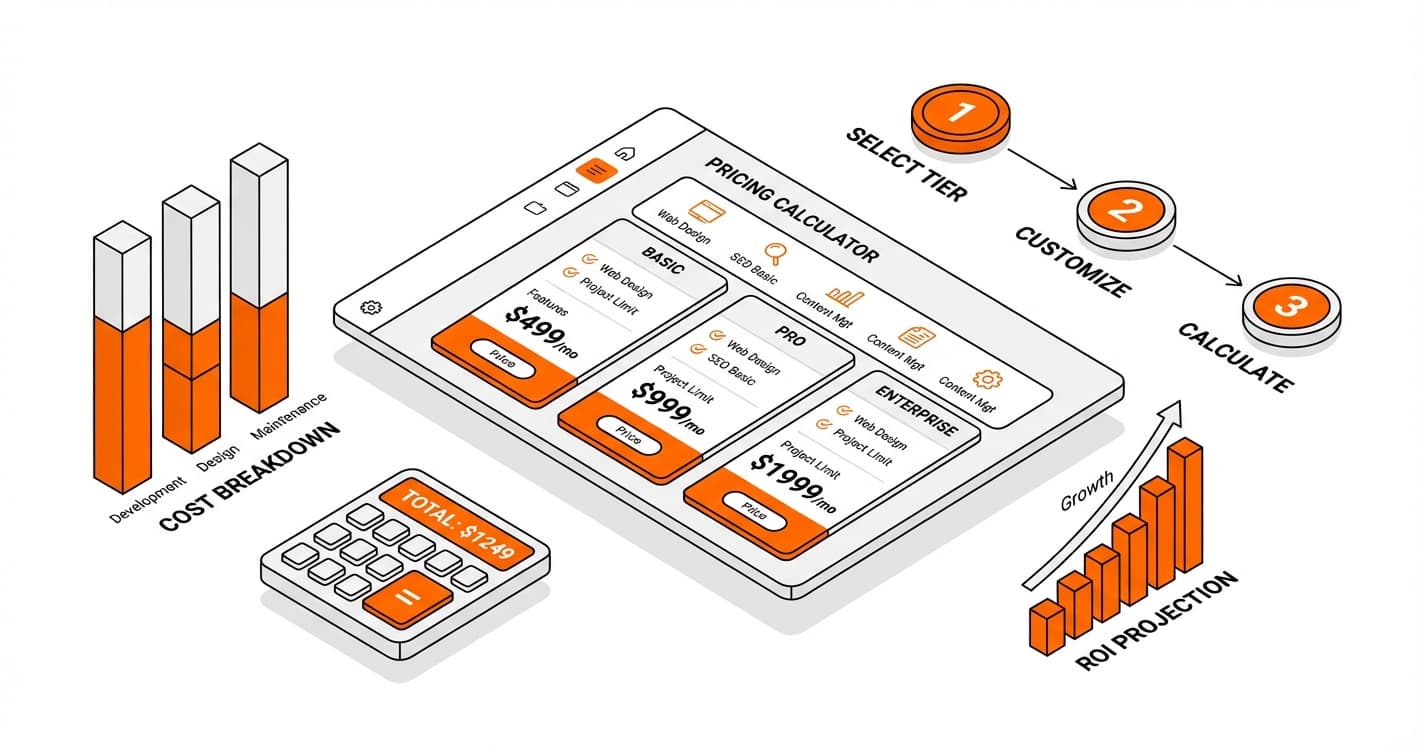
In 2026, average web agency rates are:
- Brochure website: €2,000 – €8,000
- E-commerce: €5,000 – €20,000
- Business application: €15,000 and above
- Redesign: €4,000 – €15,000
The choice between a fixed price and a custom quote depends on your project. For a simple website, a package may be sufficient. For a strategic project, a tailored approach is often more relevant and more cost-effective in the long run.
What Criteria Actually Influence Web Agency Pricing in 2026?
In 2026, the price of a web agency no longer depends solely on the number of pages to be created. Rates are now influenced by far broader technical, strategic, and business criteria. Understanding these factors allows you to properly evaluate a quote and avoid unpleasant surprises.
The first determining factor is project complexity. A simple brochure website with a few static pages will naturally cost less than a business platform incorporating automation, APIs, and an advanced management system. The more customized the development, the more production time increases, which directly impacts the budget.
The second factor is the level of design customization and user experience (UX/UI). A modified template will cost less than a fully bespoke design. In 2026, expectations around ergonomics, speed, and accessibility are high. An optimized UX requires research, prototyping, and testing phases, which represent an additional but strategic cost.
The third key element is performance and SEO optimization. A site designed to generate organic traffic requires a solid technical structure, a clear hierarchy, a well-thought-out internal linking strategy, and advanced optimizations. A performance-oriented agency integrates these elements from the design phase, which increases the initial cost but improves the return on investment.
Security is also a major factor. Sites handling sensitive data or online payments must incorporate advanced security protocols, audits, and sometimes specific infrastructure. These requirements influence the final rate.
Another important criterion is integrations and automation. Connecting a site to a CRM, an ERP, accounting software, or a marketing automation solution requires additional development. The more systems to connect, the more complex the project becomes.
The agency’s methodology also plays a role. Some agencies work with standardized packages, while others, like Peak Lab, favor a tailored approach. A custom quote makes it possible to align the project precisely with real business objectives, avoiding payment for unnecessary features.
Post-launch maintenance and support also influence the budget. A high-performing website requires regular updates, technical monitoring, and sometimes functional enhancements.
Finally, the agency’s level of expertise and reputation have an impact on rates. An agency specializing in complex projects or focused on business results will generally charge more than a generalist provider, but the return on investment can be significantly higher.
In summary, the price of a web agency in 2026 depends primarily on:
- Technical complexity
- Level of customization
- SEO and business objectives
- Required integrations
- Security
- Strategic support
Choosing an agency should not come down to the listed rate alone, but to the real value delivered to your project.