

We build custom Laravel business apps, SaaS platforms and APIs, from planning through maintenance. An architecture designed to grow with you.
Three questions to make our first conversation useful.
Question 1/3

Services
Not promises. Results.
We build Laravel APIs to connect your application to a React or Next.js frontend, ERP, CRM or payment service. Authentication, data contracts and error handling are part of the work.
Code and dependency audit, fixes for fragile areas, added tests and staged upgrades: we evolve a live Laravel application with an explicit migration plan.
From an initial release to a platform used every day, we scope user journeys, account management, business rules and integrations. We prioritize the scope before each delivery.
We build tools around your processes: roles and permissions, approval flows, dashboards and customer portals.
Tell us about your users, processes and connected tools so we can define a realistic first step.

Lucien ArbieuCEO and co-founder of PeakLab
Objective
1
Laravel is an open-source PHP framework with routing, validation, authentication and testing tools. Its conventions give teams a shared project structure.
2
Eloquent and migrations help organize the data model and its changes. The result still depends on well-designed relationships, indexes and access rules for your business.
3
Queues, notifications and caching can handle imports, emails and synchronization without doing everything during a user request. Configuration and monitoring must match the actual workload.
4
The interface can stay within Laravel or evolve separately from the backend. Interactions, search visibility and your team's skills guide this architecture choice.
Maintenance
Launching the application is only one step. We define ongoing support around its criticality, actual use and the commitments agreed together.
Laravel and PHP versions, Composer dependencies and access rights are monitored. Fixes are planned and checked before deployment.
We look for slow queries, repeated relationship loading and missing indexes, then prioritize improvements on the journeys people actually use.
Queued imports, emails and synchronizations require failed-job monitoring and recovery. Backups and restoration are planned with the operation of the product.
Interfaces
For back offices or business forms built around Laravel, with the interface kept inside the application.
For a more interactive interface whose screens and backend stay in one Laravel project.
For a public frontend with SEO needs or an interface that must evolve separately from the backend.
Services
We design the screens, APIs and data model together. Responsibilities between Laravel and the interface are defined from the outset to make development and maintenance easier.
We start with users, data and existing systems. We choose Laravel when its ecosystem fits the need, and explain the technical decisions before development.
We define critical journeys, access rules and error cases, then test them appropriately. Regular demos make it possible to adjust the work before production.
Source code, documented decisions, deployment instructions and dependency tracking help your team or another provider maintain the application.
Business app, SaaS or API: share your context and constraints so we can define the next steps together.
Business app, SaaS or API: share your context and constraints so we can define the next steps together.
Why us
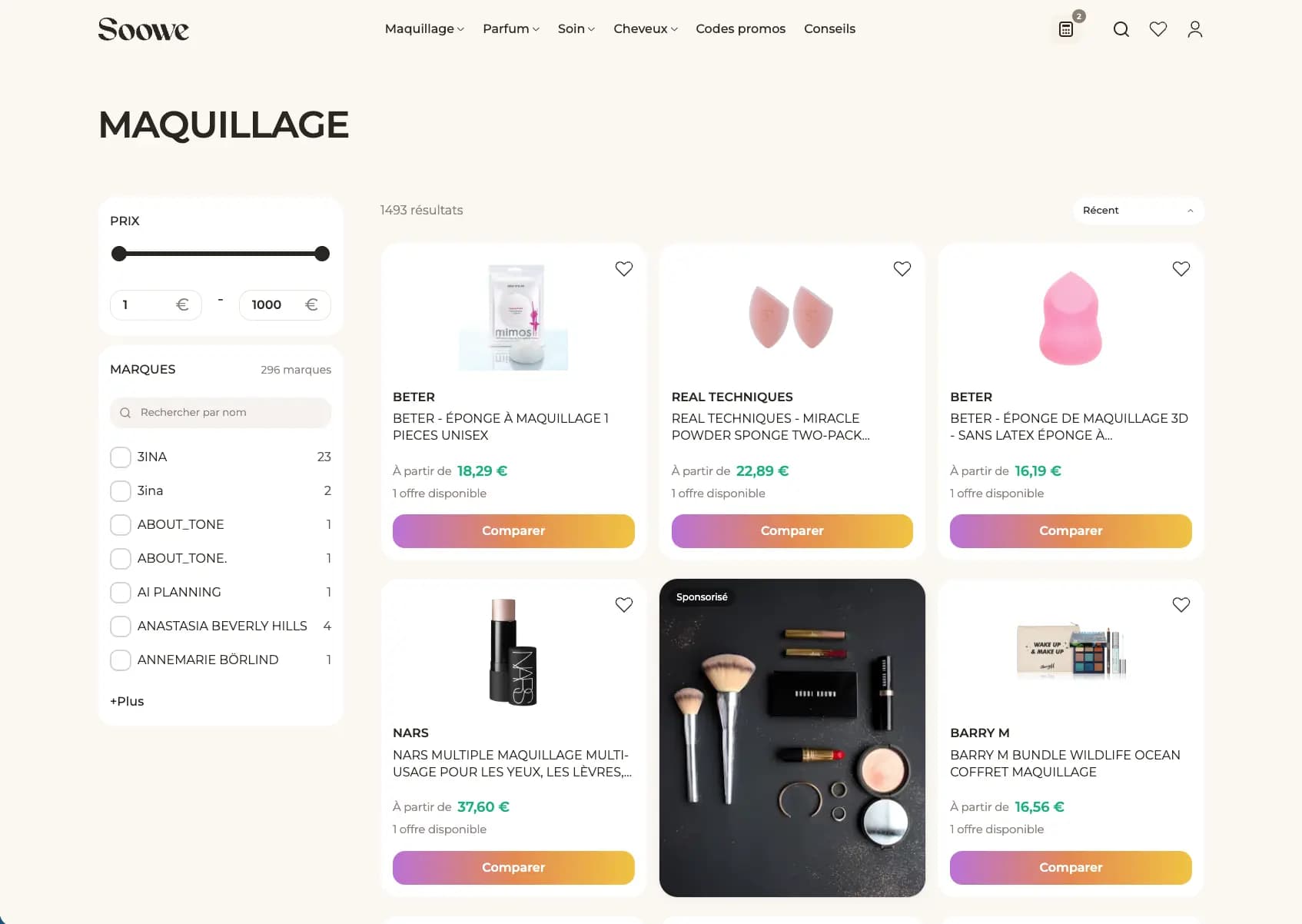
PeakLab combined Laravel with Next.js to build Soowe, a beauty product comparison platform. It brings together offers from four affiliate networks and includes a custom administration interface.
4 affiliate networks connected
10,000+ products available
30+ admin modules
Method
Not promises. Results.
1
We review users, data flows, connected tools and risks. For an existing application, we first assess the code and versions in use.
2
We define the data model, permissions, interfaces and API exchanges. Together we agree on the first scope and acceptance criteria.
3
Features are delivered in stages. We prioritize tests for business rules, integrations and journeys involving sensitive data or payments.
4
Data migrations, configuration, monitoring and documentation are prepared for launch. A maintenance plan then covers fixes and upgrades.
Upgrades, performance, security or new features: let’s discuss your priorities and the current state of your application.
Lucien ArbieuCEO and co-founder of PeakLab
FAQ
Cost depends on the number of user journeys, complexity of business rules, integrations, data migration and expected security level. After discovery, we estimate a prioritized scope and state the assumptions and exclusions.
Copyright © PeakLab 2026. All rights reserved.