Building an application or a SaaS is today one of the most effective ways to launch a profitable digital project. With the rise of cloud computing, no-code tools and artificial intelligence, it has never been more accessible to turn an idea into a digital product. Yet many entrepreneurs face the same question at the outset: where do you start when building an app or a SaaS?
In reality, the success of a SaaS product does not depend solely on technical development. Even before writing a single line of code, it is essential to validate your idea, understand your market and identify a real problem to solve. Many projects fail precisely because they start directly with the technology, without having confirmed that genuine demand exists.
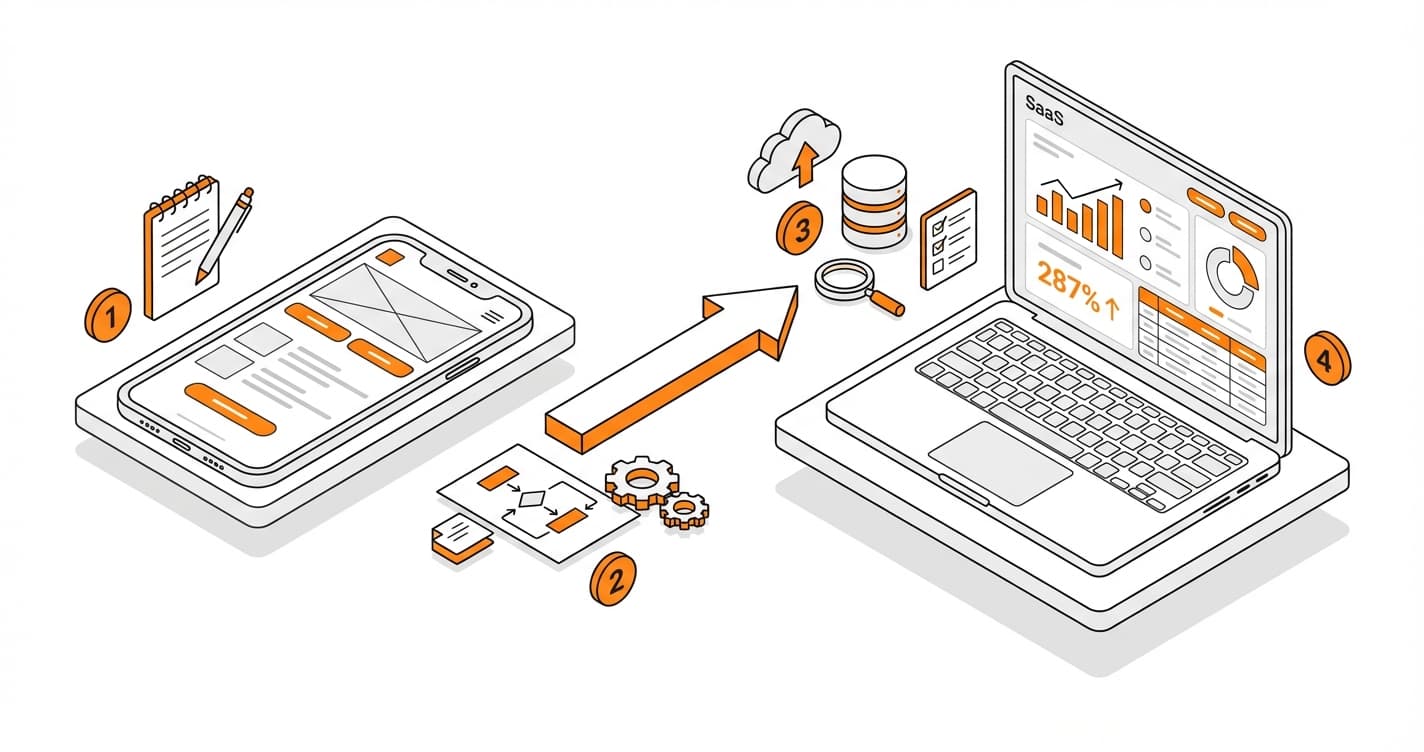
Building a high-performing SaaS involves following several key steps: analysing a specific need, defining a clear value proposition, designing an MVP (Minimum Viable Product) and putting a growth strategy in place. These steps help limit risk and maximise the project’s chances of success.
But concretely, what are the first steps to building an application or a SaaS? Should you start with the idea, the market, the technology or the product? In this article, we will look at where to begin when launching a SaaS or an application, the essential steps to follow and the mistakes to avoid when starting a digital project.
Why validate your idea before building an app or a SaaS?
When you want to build an application or a SaaS, the temptation is often to jump straight into product development. Many entrepreneurs believe the priority is to quickly build a functional platform or application. Yet in the majority of cases, this approach leads to failure.
Before developing a product, it is essential to validate your SaaS idea. This step involves verifying that a genuine need exists in the market and that users would be willing to use — or even pay for — the proposed solution.
Many startups fail precisely because they build a product that nobody actually asked for. According to several studies of the startup sector, the absence of market need is one of the leading causes of failure.
Avoid building a product nobody uses
One of the greatest risks when launching a SaaS or an application is spending several months developing a product without having confirmed that demand exists.
Building a SaaS often requires:
- development time
- technical resources
- sometimes financial investment
If the idea has not been validated upfront, you may end up with a well-built application… but no users.
Validating your idea therefore means answering one fundamental question:
Do people actually experience this problem?
If the answer is yes, it becomes far more worthwhile to invest time and energy into developing the product.
Truly understand the users’ problem
A high-performing SaaS is not built on a good idea alone. Above all, it must solve a concrete and specific problem.
Validating the idea helps you better understand:
- the difficulties users face
- the existing solutions on the market
- the real expectations of future customers
This research phase often leads to improvements on the initial idea. In some cases, entrepreneurs discover that the problem is slightly different from what they had imagined.
By talking to potential users, it becomes possible to identify the features that are genuinely useful, rather than developing an overly complex product.
Avoid wasting time and money
Developing an application or a SaaS can take several months of work. If the idea has not been tested beforehand, you risk discovering too late that the product does not match market expectations.
Validating your idea allows you to significantly reduce this risk. This step can be completed quickly using various methods:
- interviewing potential users
- analysing Google searches
- studying competing solutions
- publishing a product landing page
These techniques allow you to test market interest before the product has even been developed.
Build a product that is genuinely useful
Another advantage of idea validation is that it allows you to build a more relevant product.
Instead of creating a SaaS based solely on intuition, the entrepreneur can rely on concrete user feedback. This information helps guide development decisions and build a product that truly meets market expectations.
It also makes the product launch easier, since early users will have already expressed their interest.
Prepare your launch strategy
Validating your idea also helps you prepare the SaaS growth strategy.
When potential users are identified from the very beginning, it becomes easier to build:
- a community around the product
- a user waiting list
- the first beta tests
These elements considerably ease the application launch, since there is already a first group of interested users in place.
An essential step for SaaS success
In summary, validating your idea before building an app or a SaaS is an essential step for reducing risk and maximising your chances of success. This phase allows you to verify that genuine demand exists, understand user needs and build a product that is truly useful.
Rather than starting with the technology, the most successful entrepreneurs always begin with the problem to solve and the market to target.
How do you find a SaaS idea that addresses a real need?
Finding a profitable SaaS idea is not simply a matter of imagining an innovative product. Most successful SaaS products are not necessarily revolutionary — they address a real and recurring problem experienced by users. To identify a relevant idea, it is therefore essential to start from the need rather than the technology.
The first method is to observe the problems users encounter on a daily basis. In many sectors, certain tasks remain complex, time-consuming or poorly optimised. A good SaaS aims precisely to simplify these processes. For example, many SaaS tools were born out of frustrations related to project management, digital marketing or invoicing.
Forums, professional groups and social networks can be an excellent source of inspiration. On platforms such as Reddit, LinkedIn or certain specialist forums, users regularly share their difficulties with existing tools. These discussions make it possible to identify concrete problems that deserve a more effective solution.
Another approach is to analyse tools that already exist on the market. When a piece of software has a large user base, it generally means it addresses an important need. However, that does not mean the product is perfect. By studying customer reviews or critiques left on marketplaces, it is possible to identify the limitations of current solutions. A SaaS idea can then consist of improving an existing solution or offering a simpler alternative.
Analysing Google searches can also help identify needs. When a large number of people are searching for how to solve a specific problem, it often indicates an opportunity. Keyword research tools are particularly useful for identifying these recurring pain points.
Finally, a good SaaS idea often comes from one’s own area of expertise. Entrepreneurs who already work in a given sector generally know the difficulties faced by professionals in that field. By turning these problems into a digital solution, they can create a useful and relevant product.
In summary, finding a SaaS idea means identifying a real, frequent and significant enough problem that users are actively looking for a solution.
What are the first steps to building an app or a SaaS?
Once the idea has been validated and the problem identified, it is time to move on to the first concrete steps for building an application or a SaaS. Contrary to what one might think, creating a SaaS does not begin directly with technical development. Successful projects generally follow a series of structured steps in order to reduce risk and build a genuinely useful product.
The first step is to clearly define the SaaS value proposition. In other words, you need to be able to explain in one simple sentence what the product does and what problem it solves. A strong value proposition clarifies the product’s positioning and precisely identifies the target users.
Next, it is important to define the user profile. Not all SaaS products target the same type of customer. Some target businesses (B2B SaaS), while others address consumers directly (B2C SaaS). Understanding your audience allows you to design a product that is tailored to the real needs of the market.
Once these elements are clarified, the next step is to design an MVP (Minimum Viable Product). The MVP is a simplified version of the product that contains only the essential features. The goal is not to create a perfect application, but to develop a first version capable of solving the users’ main problem.
This approach allows you to launch the product quickly while testing the market’s response. Feedback from early users is invaluable, as it allows the product to be improved progressively.
It is also recommended to prepare the launch strategy from the very beginning of the project. This can include creating a SaaS landing page, building a waiting list or publishing content around the problem the product aims to solve.
Finally, you need to think about the SaaS business model. Most SaaS applications operate on a monthly or annual subscription basis. Defining the pricing strategy from the outset allows you to build a product that is viable over the long term.
In summary, the first steps to building a SaaS consist of clarifying the idea, understanding the users, developing an MVP and preparing the product launch.
Where should you start: a SaaS or an App?
When an entrepreneur wants to launch a digital product, one question comes up very often: should you start by building a SaaS or a mobile application? Both models can be highly interesting, but they generally address different use cases. Before choosing, it is essential to understand the project’s objectives, the problem to solve and the users’ habits.
In reality, the decision between SaaS or mobile application depends primarily on the type of product you want to build and the audience you are targeting.
Understanding the difference between an app and a SaaS
Before choosing where to start, you need to understand the fundamental difference between these two models.
A SaaS (Software as a Service) is software accessible via a web browser. Users do not need to install the application on their device: they can simply log in to an online platform. Tools such as CRMs, management software or marketing platforms generally operate according to this model.
A mobile application, on the other hand, is designed to be installed on a smartphone or tablet via platforms such as the App Store or Google Play. It is often used for faster, more interactive or more frequent use cases.
The question is therefore not purely technological. It depends above all on user behaviour and the type of experience you want to deliver.
SaaS: often the best starting point
In many cases, starting with a web SaaS is often simpler and more strategic.
First of all, a SaaS allows you to develop a product more quickly. Users can access the software directly via their browser, without going through the constraints of mobile app stores.
Building a mobile application often requires:
- an iOS version
- an Android version
- approvals on the stores
- regular updates
These steps can slow down a product launch. With a web SaaS, it is possible to update the platform immediately and deploy new features without going through these procedures.
Furthermore, the SaaS model is particularly well suited to B2B products. Many businesses prefer to use browser-based tools, as they can be accessed from different devices: desktop, tablet or smartphone.
Finally, SaaS often makes it easier to implement a subscription-based business model, which is particularly attractive to entrepreneurs and investors.
Mobile application: ideal for certain use cases
Even though SaaS is often a good starting point, some ideas are better suited to a mobile application.
Apps are particularly effective when:
- usage is very frequent
- the experience needs to be fast and intuitive
- certain features leverage smartphone capabilities (notifications, camera, GPS)
For example, fitness, delivery or social networking applications work better as mobile apps.
In these cases, the user experience depends heavily on the smartphone, which justifies starting directly with an application.
A hybrid strategy that is increasingly common
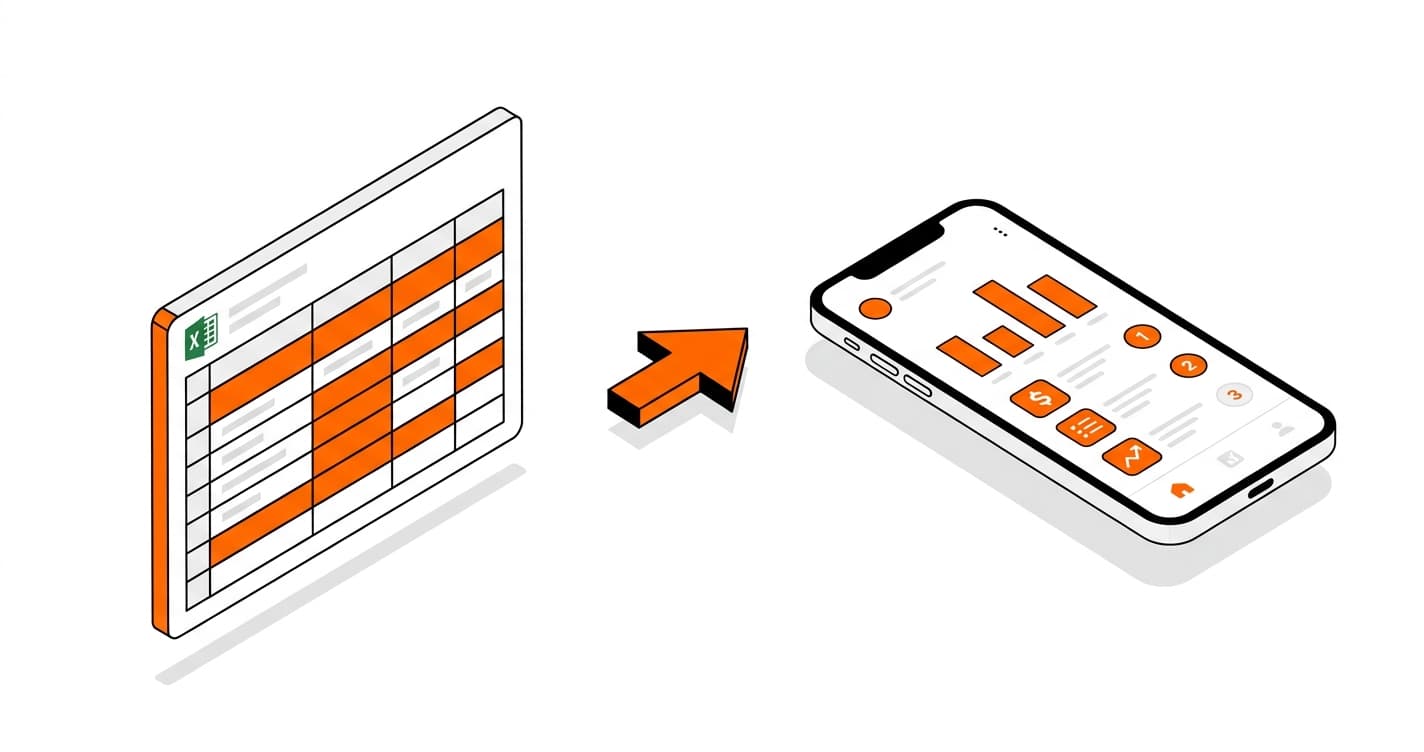
Today, many startups adopt a hybrid strategy: they start by building a web SaaS, then develop a complementary mobile application.
This approach allows them to validate the product more quickly while keeping development costs low at the outset.
Once the product finds its market and users are on board, it becomes more relevant to invest in a mobile application to enhance the user experience.
The most important factor: the problem to solve
Ultimately, the question « SaaS or app? » must always be guided by the problem you are trying to solve.
If your solution is used primarily on desktop or in a professional context, starting with a web SaaS is often the best option.
If the experience relies on fast, daily mobile usage, then a mobile application may be more appropriate.
In summary, there is no single right answer. The choice depends above all on the users’ needs and the nature of the product you want to build.
Conclusion: how to get your app or SaaS off to the right start?
Building an application or a SaaS can seem complex at first, but by following a structured approach, it becomes much simpler to turn an idea into a real product. The most common mistake is to start directly with technical development, when the priority should be to validate the problem and understand market needs.
Before building an app or a SaaS, it is essential to test your idea, identify potential users and verify that the solution addresses a concrete need. This step helps you avoid developing a product that nobody is interested in and builds a solid foundation for the project.
Once the idea is validated, the first steps consist of defining the value proposition, designing an MVP and preparing the launch strategy. The MVP allows you to quickly release a first version of the product in order to gather user feedback and improve the solution progressively.
The choice between a web SaaS or a mobile application also depends on the type of usage. In many cases, starting with a SaaS allows you to test the market more quickly, while some ideas require a mobile application from the outset.
In reality, the success of a project does not rest solely on technology, but on the ability to solve a real problem and create value for users. The entrepreneurs who succeed are those who build products that are useful, simple and scalable.
In summary, to get your app or SaaS off to the right start, you need to begin with the problem, validate the idea, launch an MVP and improve the product based on user feedback. It is this progressive approach that allows you to turn an idea into a viable and sustainable digital product.
LALucien Arbieu
AI expert and digital transformation consultant at PeakLab.