The rise of artificial intelligence is profoundly reshaping the way software is designed, developed and deployed. Today, one question keeps coming up among entrepreneurs, developers and digital project owners: can AI build a custom SaaS? Code automation, feature generation, advanced personalization, reduced development costs… the promises are many. In this article, we take a clear, concrete look at the real role of AI in creating a custom SaaS, its current capabilities, its limitations, and the opportunities it offers for building software solutions tailored to specific business needs.
What role does AI play in SaaS development today?
Artificial intelligence is no longer just an assistance tool in software development: it is becoming a genuine driver of SaaS creation. Today, thanks to the spectacular advances in language models and generative AI tools, it is now possible to design, develop and evolve a custom SaaS with unprecedented speed and efficiency. Recent updates to tools like Claude AI, developed by Anthropic, perfectly illustrate this paradigm shift.
AI as a software development co-pilot
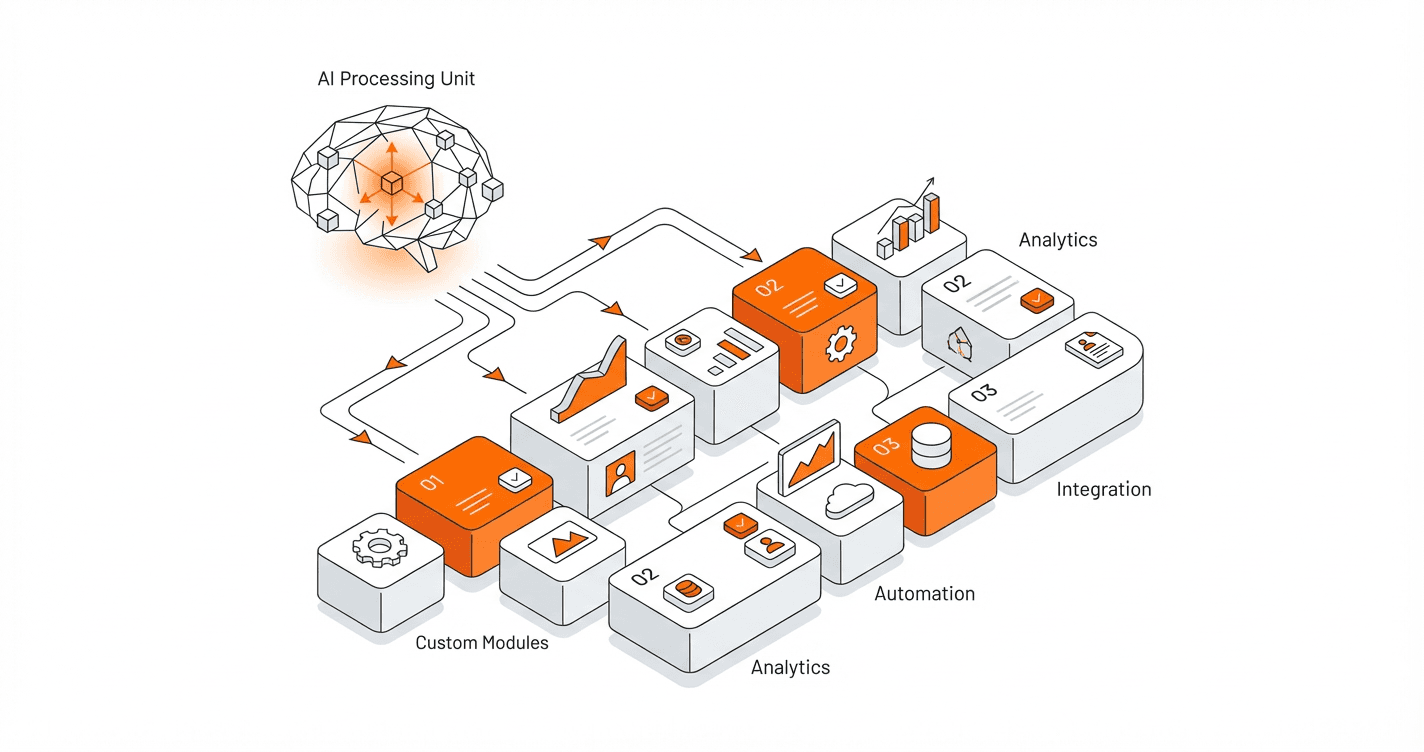
One of AI’s major roles in SaaS development is its ability to act as a technical co-pilot. Current AI models can generate functional code, propose coherent software architectures, fix bugs, optimize performance and even refactor existing codebases. With the latest advances in Claude AI, it is now possible to work on complex projects involving multiple files, advanced backend logic and complete API integrations.
In practical terms, this means a project owner can go from an idea to a working SaaS prototype in record time, without immediately assembling a full technical team.
From code generation to building a complete SaaS
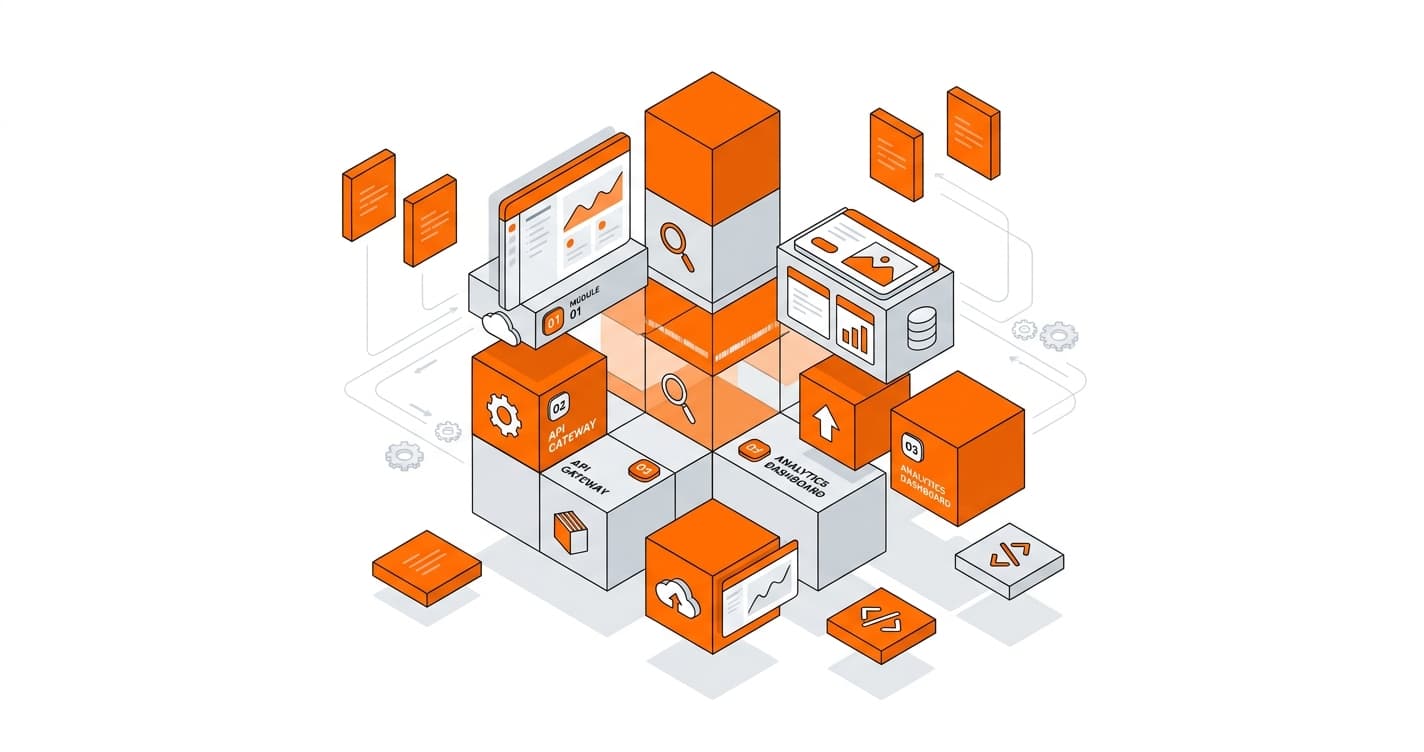
We are no longer talking about isolated code snippets. The new capabilities of AI models literally make it possible to build a SaaS end to end:
– defining features based on a precise business need
– creating the database
– developing the backend (authentication, business logic, API)
– designing the frontend (interfaces, UX, components)
– setting up payment systems, user roles and security
Thanks to AI models capable of maintaining overall project coherence, it becomes possible to build a structured, scalable and evolvable SaaS product. The latest updates to Claude AI, particularly around long-context management and complex projects, reinforce this ability to work as a true augmented software engineer.
Faster time-to-market and lower costs
One of the most visible impacts of AI in SaaS development is the drastic reduction in time-to-market. Where several months were previously needed to design a first version, a few weeks or even a few days can now suffice.
This acceleration allows startups and entrepreneurs to test their idea quickly, validate a market and iterate continuously. From an economic standpoint, AI also helps reduce development costs by limiting the systematic need for expensive technical resources in the early phases of a project.
AI in the service of personalization and custom development
A high-performing SaaS is above all a SaaS tailored to its users. AI plays a key role here in personalizing features, interfaces and user journeys. It makes it possible to analyze behaviors, offer intelligent recommendations and adapt the product in real time to each customer’s specific needs.
In the context of a custom SaaS, AI becomes a central engine of differentiation, capable of transforming a standard tool into a highly targeted business solution.
Current limitations and the human role
Despite its advances, AI does not fully replace human expertise. It excels at execution, generation and optimization, but it remains dependent on clear directives, a coherent product vision and human strategic choices. Building a successful SaaS still relies on a deep understanding of the market, users and business challenges.
AI should therefore be seen as an accelerator and amplifier of skills, not as a total substitute for human intelligence.
Toward a new era of SaaS development
Today, with tools like Claude AI and its recent updates, it is clear that AI can literally participate in building a complete SaaS. It is transforming the way digital products are conceived, opening software development to new profiles and redefining the standards of speed and efficiency.
We are entering an era where custom SaaS is no longer reserved for large technical teams, but becomes accessible to anyone capable of clearly articulating a need and a product vision.
Can you really build a SaaS without a developer using AI?
The question keeps coming up among entrepreneurs and digital project owners: is it truly possible to build a SaaS without a developer using AI? In light of recent advances in artificial intelligence, the answer is no longer as clear-cut as it was just a few years ago. Today, AI clearly makes it possible to reduce or even eliminate certain technical barriers, but it does not make the human role entirely obsolete.
From a purely technical standpoint, advances in language models like Claude AI, developed by Anthropic, have profoundly transformed the software creation process. These AI models are now capable of generating backend and frontend code, structuring a database, designing APIs and even proposing complete SaaS architectures. For a non-developer, this means it is possible to go from an idea to a functional product by relying solely on clear instructions and a well-defined business logic.
In practice, an entrepreneur without technical skills can today use AI as a virtual software engineer. By precisely describing the expected features — authentication, user management, dashboards, automations, payments — AI can generate the bulk of the SaaS structure. Recent model updates, particularly around long-context management and complex projects, even make it possible to maintain coherence across complete applications, not just isolated pieces of code.
AI becomes even more powerful when combined with no-code and low-code tools. Platforms like Bubble, Webflow or Make allow you to create interfaces, workflows and automations without writing a single line of code. AI then steps in to generate the logic, optimize flows and resolve technical blockers. This AI + no-code combination makes SaaS creation accessible to non-technical profiles, while maintaining a high level of customization.
However, building a SaaS without a developer does not mean building a SaaS without skills. AI executes, but it does not decide. The success of a SaaS product still depends on a clear product vision, a deep understanding of the user problem and the ability to precisely formalize requirements. Without these elements, even the best AI will produce an incoherent or useless tool. The role of the « non-developer » is therefore evolving toward that of a product orchestrator, capable of guiding AI with precision.
There are also limitations that should not be underestimated. Advanced security, large-scale scalability, performance optimization and regulatory compliance (GDPR, sensitive data management) remain complex topics. AI can propose solutions, but validating them often requires human expertise. As the SaaS grows and gains users, the occasional involvement of a developer or technical expert often becomes inevitable.
In reality, the question is no longer whether you can build a SaaS without a developer, but rather how far you can go without one. For an MVP, a niche product, a vertical SaaS or an internal tool, AI today allows you to go very far — sometimes all the way to a commercial launch. For a SaaS with high ambitions, designed to scale rapidly, AI then becomes a massive accelerator, but not a total replacement for technical skills.
In conclusion, yes, it is now realistic to build a SaaS without a developer using AI, especially in the early phases of a project. AI is democratizing access to software development and reshuffling the cards of digital entrepreneurship. But long-term success still depends on the human element: the vision, the strategy and the ability to turn a technical tool into a genuinely valuable product.
What are the current limitations of AI in building a custom SaaS?
Despite its spectacular advances, artificial intelligence cannot yet build a custom SaaS without constraints. While it acts as a powerful accelerator, certain structural, technical and strategic limitations remain. Identifying them is essential to avoid misjudging expectations and to build a viable product over the long term.
An imperfect understanding of business domains
AI excels at execution, but it remains dependent on the quality of the instructions it receives. It does not intuitively understand a trade, a market or a complex business context. When a SaaS targets a very specific need (logistics, healthcare, finance, manufacturing), AI may produce technically correct but functionally ill-suited features.
Without an in-depth business analysis conducted by a human, the risk is building a product that « works » technically but does not truly meet the expectations of end users.
Limitations in architecture and scalability
Building a SaaS that works for a handful of users is one thing; building one capable of scaling at large is another. AI can propose backend architectures, but it still struggles to anticipate the real challenges of load management, performance, latency or resilience.
In a custom SaaS context, these technical choices are critical. A poor initial architecture can hinder the product’s growth or generate significant costs during refactoring. At this stage, the expertise of a software architect often remains indispensable.
Security and regulatory compliance
Data security is one of the most sensitive points in building a SaaS. Authentication, permission management, vulnerability protection, encryption, GDPR compliance… these are all areas where AI can suggest best practices, but without absolute guarantees.
AI models do not bear legal responsibility for the choices made. In the event of a data breach or regulatory non-compliance, liability falls entirely on the SaaS publisher. This requires human audits, advanced security testing and sometimes the involvement of legal or technical experts.
A strong dependency on prompt quality
AI is only as effective as the instructions it receives. In a SaaS project, an imprecise prompt can lead to incoherent technical choices or poorly implemented features. This dependency creates a new key skill: AI steering.
A project owner who lacks rigor in formalizing requirements risks multiplying unnecessary iterations, or even building a fragile technical foundation. AI does not correct a vague vision; it amplifies it.
Limitations in user experience (UX)
While AI can generate functional interfaces, it still struggles to design a truly differentiating user experience. UX is built on emotion, intuition, user testing and a deep understanding of human behavior.
A high-performing custom SaaS is not just usable: it must be enjoyable, fluid and intuitive. These dimensions remain largely dependent on designers and real user feedback, which AI cannot fully simulate.
Strategic responsibility remains human
AI does not make strategic decisions. It does not choose a market positioning, a business model, a product roadmap or a differentiation strategy. These structural choices always belong to humans.
Even with advanced tools like Claude AI, developed by Anthropic, AI remains a tool for execution and optimization, not a decision-maker. Entrusting the entire product strategy to AI exposes you to incoherent choices or ones disconnected from the real market.
The illusion of a « 100% automated SaaS »
Finally, one of the most important limitations is psychological. AI can create the illusion that a SaaS can be built, maintained and grown without human intervention. In reality, the more users a product gains, the more it requires support, evolution and human judgment calls.
AI reduces friction, accelerates cycles and democratizes access to development, but it does not eliminate the inherent complexity of a living SaaS product.
AI and custom SaaS: what concrete opportunities exist for entrepreneurs in 2026?
In 2026, the combination of AI + custom SaaS represents one of the greatest entrepreneurial opportunities of the decade. Never before has it been so accessible to design software products tailored to precise business needs, while retaining a strong capacity for innovation. But while AI opens spectacular doors, it does not replace everything: the entrepreneurs who succeed will be those capable of combining technological power with a clear human vision.
Ultra-targeted SaaS products that are finally profitable
One of the great opportunities offered by AI is the creation of niche SaaS products, designed for very specific use cases. Where generalist software quickly reaches its limits, custom SaaS solutions address precise business challenges: internal automation, decision-support tools, specialized B2B platforms, sector-specific solutions.
Thanks to AI, development costs and timelines drop significantly, making these projects economically viable even in smaller markets. In 2026, value will no longer lie in the volume of users, but in the relevance of the solution.
AI as an accelerator, not a strategist
AI today makes it possible to generate code, automate processes, prototype rapidly and iterate continuously. It is an exceptional execution lever.
But a major opportunity is emerging for entrepreneurs who understand one essential thing: AI does not define the vision. It executes an existing vision. Without a clear strategic framework, a deep understanding of the market and sound product prioritization, AI can produce quickly… but produce poorly.
This is precisely where the difference between a « functional » SaaS and a profitable, sustainable SaaS is decided.
The importance of the human element in a custom SaaS
A custom SaaS involves subtle choices:
– which features are genuinely useful?
– which technical trade-offs are acceptable?
– what level of customization is relevant?
– how do you anticipate the product’s evolution?
These decisions require human sensitivity, dialogue, back-and-forth exchanges and a deep understanding of business challenges. In 2026, the entrepreneurs who succeed will not be those who « delegate everything to AI, » but those who know how to collaborate intelligently with it.
Why working with a specialized agency makes the difference
This is where the strategic value of working with a custom SaaS expert agency comes in. An agency does not simply produce code or use AI: it structures the vision, challenges ideas, anticipates risks and transforms an intuition into a coherent product.
Unlike AI alone, an agency allows you to have a dialogue, express doubts, refine a strategy and benefit from an experienced external perspective. This human interaction is often decisive in complex or ambitious projects.
Peak Lab: combining human vision with the power of AI
For entrepreneurs looking to build a custom SaaS in 2026, working with an agency like Peak Lab represents a concrete opportunity. The approach consists of combining artificial intelligence and human expertise to build products that are both technically solid and strategically relevant.
With an agency, AI becomes a tool in service of the project, not the other way around. The business vision, user experience, product roadmap and technology choices are thought through holistically, with a deep understanding of the client’s real challenges.
A decisive competitive advantage in 2026
In 2026, the technological barrier will be increasingly low. What will make the difference will not be the ability to « use AI, » but the ability to use it well. Entrepreneurs who surround themselves with partners capable of translating an idea into a concrete product will benefit from a lasting competitive advantage.
Building a custom SaaS will no longer be just a matter of technology, but of vision, intelligent execution and human collaboration.
In summary, AI opens extraordinary possibilities for entrepreneurs. But it will be those who know how to pair this power with a structured vision, supported by human exchanges and expert guidance, who will truly turn these opportunities into success.
LALucien Arbieu
AI expert and digital transformation consultant at PeakLab.